News & Insights
Caroline Montojo Is Recipient of the Dr. Isadore Rosenfeld Award for Building Trust in Science
Research!America recognizes her leadership in connecting science and society and advancing collaboration across philanthropy

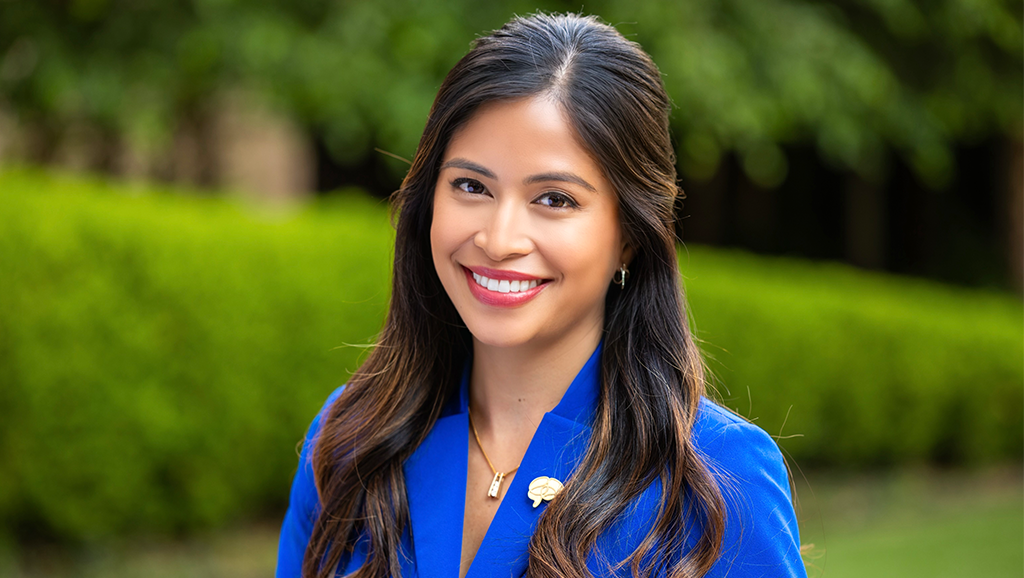
Dana Foundation President and CEO Caroline Montojo, Ph.D., has been named the recipient of Research!America’s Dr. Isadore Rosenfeld Award for Building Trust in Science, which honors individuals whose research advocacy has made a lasting contribution to public trust in science. The recognition reflects her commitment to community-partnered neuroscience and collaboration across philanthropy to strengthen the relationship between science and society. Through support for education, interdisciplinary training, public engagement, and the civic infrastructure that sustains science, the Dana Foundation helps create opportunities for people to shape science and experience its benefits. In this Q&A, Montojo reflects on how this work advances Dana’s mission and what it takes to earn and sustain trust.
What does trust in science mean to you and to the Dana Foundation? What is the difference between public trust in science and public confidence in scientific institutions? Can we have one without the other?
For me, trust in science begins with whether people experience scientific institutions as honest, transparent, responsive, and committed to their well-being. Trust develops through what institutions do and how they build relationships over time.
Part of understanding how trust develops is recognizing the distinction between public trust in science and confidence in scientific institutions. Someone can value scientific evidence and the process of discovery while questioning whether a particular institution understands their needs or acts in their interests. One can exist without the other, but sustaining both requires attention to how institutions build and maintain relationships with the public.
We should also be careful about treating public attitudes as a single verdict on science. A 2025 ASTC survey found that 72 percent of US adults agreed that science benefits people like them, while also revealing gaps in understanding how federal investment supports that science. Positive attitudes toward science can coexist with gaps in understanding of how scientific research is supported.
At the Dana Foundation, our mission is to advance neuroscience that benefits society and reflects the aspirations of all people. Fulfilling that mission requires us to understand people’s goals, needs, and values, and give them meaningful opportunities to shape how neuroscience serves their lives.
Has the scientific community historically treated trust in science as a communications challenge when it should be understood in greater complexity, as a question of shared public authority and accountability?
Yes, I think we have too often treated it primarily as a communications challenge. At science meetings, I frequently hear that the solution to building trust in science is that scientists need to communicate better. Clear communication matters enormously, but it cannot carry the full responsibility for building trust.
The traditional “deficit model” assumes that if people understood more science, they would become more supportive. That model overlooks other factors that influence trust: people’s experiences with institutions, whether their concerns are taken seriously, and whether they have a meaningful voice in decisions that affect them.
Why institutions engage with the public matters, too. Sometimes the goal is education—helping people understand a scientific finding or an emerging technology. Other times, the goal should be to learn from people and involve them in shaping research priorities and decisions. This kind of two-way engagement creates opportunities for institutions and communities to share authority over how science is conducted and applied.
Shared authority means recognizing that scientists and communities contribute different kinds of expertise. Scientists bring methods and evidence; communities bring insight into the conditions they live with and the outcomes they value. To be accountable, institutions need to be clear about what participants can influence, show how community input informs their work, and explain their reasoning when decisions don’t align with community priorities.
Ultimately, institutions earn trust when people can see that their participation helps shape the direction of science and its impact on their lives.
What have you learned about what it takes to earn and sustain trust between science institutions and the communities they intend to serve? Can you share a moment when listening to community perspectives deepened your understanding of how neuroscience could serve their priorities?
I’ve learned that listening must come with a willingness to change your assumptions and a commitment to follow through.
One experience that stays with me came during a site visit to UCLA and Charles R. Drew University for our Dana Center Initiative for Neuroscience & Society. Our hosts took us through neighborhoods in South Los Angeles, where residents faced limited access to fresh food, little green space, and persistent helicopter noise. While there, we met with community members at Community Coalition, including a social worker supporting families, a youth counselor using music to help young people build resilience, and an organizer advocating for better access to fresh food.
What struck me was how clearly they saw opportunities for neuroscience to improve their lives. They wanted to understand how food, neighborhood environments, noise, and music affected the brain. These were fundamental research questions rooted in daily experience, with answers that could help them support their families and advocate for their communities.
That experience reinforced my conviction that communities should help shape the questions science pursues. A research question can emerge from a scientist’s observations in the laboratory, and it can also emerge from a parent’s concern, a counselor’s practice, or a community organizer’s experience.
Earning trust means taking those questions seriously and treating communities as partners in science. Sustaining it means staying connected, sharing what is learned, and continuing to ask together what should come next.
How does your understanding of what it takes to build trust shape Dana’s funding priorities at a time of growing mistrust in institutions? Could you share an example of an effort the Foundation has supported to address a need and what that support has made possible?
Our grantees have deeply shaped my thinking. Their work shows how listening to patients and communities can lead to different research questions, more meaningful treatment goals, and stronger ethical safeguards. It also shows that sustained engagement requires time, skills, and support that are often difficult to secure.
That is why Dana invests in approaches that bring people into the work early enough to influence its direction. For example, we have supported collaboration between people with spinal cord injuries and brain-computer interface developers to define clinical outcome measures grounded in patient priorities. This helps ensure that the outcomes patients value inform how technologies are evaluated and ultimately used.
Dana’s commitment to trustworthy science extends beyond individual research projects to the broader systems that support them. Federal funding disruptions and abrupt grant cancellations have created profound uncertainty for researchers and the communities depending on their work. In partnership with the Doris Duke Foundation and other philanthropic colleagues, we have helped mobilize support for the civic infrastructure science depends on, including credible information, public engagement, and science-informed decision-making.
Alongside other foundations, we support the Partnership for Public Service’s work to support the federal scientists and public servants who sustain our nation’s scientific infrastructure. Through its Federal Community Project and interactive “Cost to Your Community” map, the Partnership helps people understand how federal changes affect their communities. Complementary efforts include a speakers bureau of former federal employees, and a Federal Alumni Network supporting displaced staff. This work supports the people behind public science and helps communities understand how their expertise serves the public good.
How do you approach using your communications platforms to bring attention to people and organizations with deep expertise in public trust and engagement with science?
I see our platforms as an opportunity to help others learn from those doing this work thoughtfully and consistently. Research institutions, museums, patient organizations, and community groups hold deep expertise in public engagement that deserves greater visibility.
Through Dana’s President’s Perspective and NeuroSociety Stories, we spotlight people working across neuroscience, ethics, education, law, policy, and lived experience, sharing how they approach difficult questions and what others can learn from their work.
I also carry that approach into convenings by recommending experts for speaking opportunities, bringing community and patient perspectives into discussions, and connecting practitioners with potential funders.
Our goal is for someone reading a story or joining a discussion to leave with ideas for listening differently, building a stronger partnership, or changing practices within their own institution. Sharing these examples can help strengthen relationships beyond the original project.
What have these efforts taught you about where Dana can make the greatest difference in strengthening the relationship between neuroscience and society?
These efforts have taught me that Dana can make a significant difference by connecting people and supporting the skills and institutional changes that help them work together. As a foundation, we can bring together researchers, community leaders, patients, practitioners, and funders who might otherwise work separately, creating opportunities for shared learning and partnerships across disciplines and organizations.
We can also support education and engagement grounded in people’s everyday experiences. Neuroscience touches how we learn, work, care for one another, and understand ourselves. Starting with people’s questions makes those connections more meaningful and creates opportunities to shape the field’s direction. Scientists also need to develop skills in listening, communication, and collaboration alongside their research expertise.
For this work to endure, institutions must recognize and value it. Dana supports the Modernizing Academic Appointment and Advancement, (MA3) Challenge, which helps universities rethink hiring, review, promotion, and tenure so that activities such as public engagement and collaboration receive meaningful recognition.
Together, these efforts can help make responsiveness to society a lasting part of how neuroscience is practiced.
Recommended Reading
Dana Foundation Announces 2026 Neuroscience & Society Champion Award Recipients
Walter Koroshetz Joins the Dana Foundation as Senior Advisor