Report
Toward Global Oversight of Human Neural Organoid and Assembloid Research
Who this is for:
Building Guardrails Together
A brief report on the 2025 Asilomar Conference on ethical and societal implications of neural organoids, assembloids, and their transplantation
ASILOMAR, CA | NOVEMBER 1O-12, 2025
The stakes are personal. For families living with serious neurological, psychiatric, and developmental disorders, neural organoid and assembloid research represents hope where few treatments exist. For decades, understanding these conditions meant choosing between animal models that don’t fully capture human brain development or examining postmortem tissue that can’t reveal how diseases unfold in living brains.
Neural organoids have changed that, creating major scientific opportunities. Grown from stem cells, these tiny 3D structures recapitulate human-specific features of brain development and can be derived from individual patients, preserving the genetic signatures of their diseases. Neural organoids allow scientists to watch disease processes unfold over time in human neural tissue and test drugs on patient-specific brain cells, potentially revealing why certain treatments work for some people but not others.
The pace of research is accelerating. It is now possible to create neural assembloids by connecting multiple brain-region organoids into functional circuits. Human neural tissue can be transplanted into animal brains, where it integrates and responds to sensory input. Neural organoids can be maintained for years, advancing through multiple stages of early brain development. They are being used for personalized medicine, evolutionary studies, and even experimental biocomputing. Each advance opens new scientific frontiers, and raises important questions that our oversight systems aren’t equipped to address.
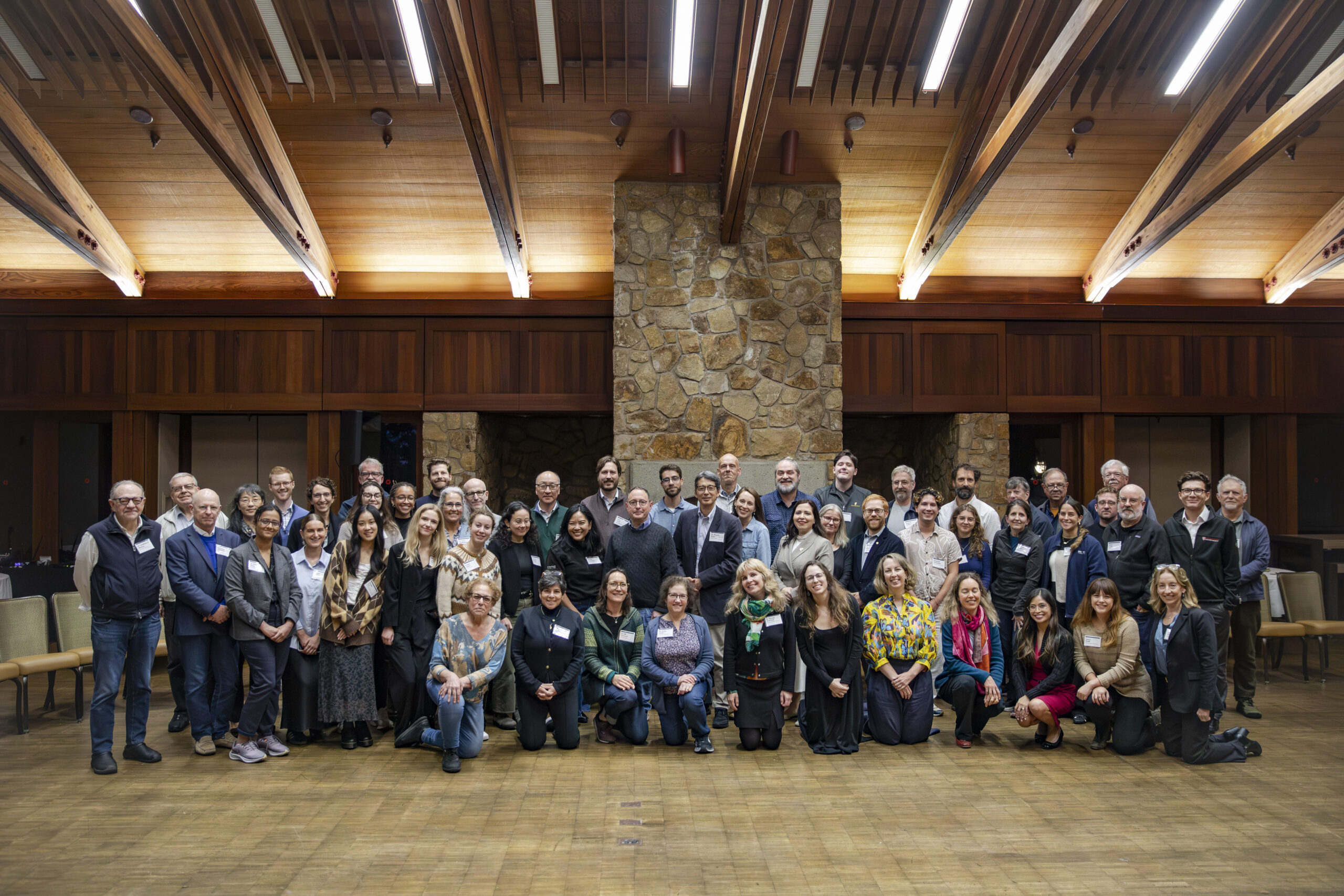
In November 2025, seventy scientists, ethicists, patient advocates, journalists, and policymakers gathered at the Asilomar Conference Grounds to confront this challenge head-on. Convened by Sergiu Pasca, a neuroscientist who uses organoids and assembloids in his research, and Hank Greely, a legal scholar specializing in the ethical, legal, and social implications of emerging biotechnologies, the meeting built on their landmark Science paper calling for sustained international coordination on oversight. Co-authored by 17 leaders across neuroscience, ethics, law, journalism, and the social sciences, the paper argued that periodic reviews are no longer sufficient. The field needs ongoing, adaptive oversight.
The oversight gap is significant. Could organoids develop sentience? Do animals receiving transplants of human-derived organoids need new protections? Should stem cell donors be informed that their cells might become brain-like structures that could exist in a dish for years or be transplanted into animals? Could neural organoids be used to test bioweapons? How do we prevent unregulated “organoid therapy” clinics from exploiting desperate patients in the way that unproven stem cell therapy clinics have?
Current oversight systems cannot adequately address these questions. University review boards evaluate one protocol at a time, with no field-level view. Professional societies update their guidelines too slowly to keep up with one of the fastest moving fields in the life sciences. National academies of science have produced some authoritative reports, but only when specifically funded to do so, and they may not revisit organoid research for many years. No international body monitors the global neural organoids and assembloids landscape.
In 1975, scientists gathered at Asilomar to establish responsible governance for recombinant DNA technology. Fifty years later, the 2025 Asilomar conference sought to do the same for neural organoids and assembloids, convening a diverse group of stakeholders proactively to build the oversight this field needs.
What the Meeting Achieved
Remarkable convergence emerged from diversity. Across seven working groups exploring potential oversight models, common principles emerged. Participants including scientists at the research frontiers, ethicists who typically recommend caution, and patient advocates hungry for breakthroughs recognized a common goal: enabling this promising research to proceed responsibly, with the guidance and public trust it needs to thrive. Participants agreed that a successful oversight system would need to:
- Be international and de-centralized. Authority should be distributed across regions, respecting diverse cultural contexts and priorities rather than imposing Western bioethics globally.
- Include patients and their advocates as partners, not audiences. Their perspectives must shape research priorities alongside those of scientists and ethicists because they are the ones whose lives are at stake.
- Be transparent, adaptable, and built to last. Progress and plans should be shared publicly, structures need to respond quickly as the science advances, and the work needs a standing plan for regular review and revision, including contingencies for major scientific developments, backed by funding committed over five to ten years.
- Maintain intellectual humility. We don’t know yet whether organoids could develop sentience or consciousness, or what animals receiving transplants might experience. We need to build monitoring systems that can adapt as our understanding evolves.
- Be simple, and focused on actionable guidance. Researchers need clear direction on when specialized review is required, how to manage donor consent, how to assess risks in transplantation studies, and how to communicate which ethical frameworks and review processes guided their work.
- Engage partners in the scientific ecosystem. Grantmakers and journals can require ethics review documentation, professional societies can establish membership expectations and advocate for policy, and science communicators can help ensure informed public understanding.
Functions of an effective oversight system would include:
- Continuous monitoring of the field through horizon scanning, tracking publications and conference presentations, and identifying emerging capabilities that might cross ethical thresholds.
- Regular convening of the people who should inform guidelines — scientists, patient advocates, ethicists, and relevant advisory bodies — together with the people who should carry them into practice — professional societies, funders, journals, training programs, and institutional review bodies — so that all of them shape the process as co-designers, not just receive its outputs.
- Developing concrete, actionable guidance: generating practical guidelines for use by scientists, institutional review committees, journal editors, grantmakers, and science communicators.
- Providing training: building local capacity by training institutional review board committee members, providing consultation on difficult cases, and sharing knowledge across institutions.
- Engaging the public authentically: not just by explaining research, but by listening to diverse interests and concerns, even those that don’t precisely align with current scientific framing and understanding.
The shared commitment was striking. Patient advocates made it clear that they don’t want research to slow down, but they know that the public needs confidence that research can proceed responsibly. Scientists emphasized that they want actionable, up-to-date guidance that can help them navigate difficult questions while maintaining public trust. Ethicists recognized that rigid prohibitions based on speculation could stifle valuable work. There was general agreement that this field needs ongoing adaptive monitoring, and that sustaining engagement and building trust across patients, donors, funders, and broader publics will serve everyone’s long-term interests.
What Comes Next
The time for action is now. Worldview Studio has outlined a two- to three-year process to build on this momentum. It would produce:
- An initial working draft of actionable guidelines, shaped by the needs of scientists, review boards, and other users across the research ecosystem
- Field monitoring infrastructure to keep guidance current as the science advances and keep the field itself informed as it grows
- Communications resources that help translate guidelines into everyday practice and make this fast-moving field more transparent to those outside it
- An expanded stakeholder network reaching further into international, industry, and cultural perspectives, and deeper patient advocate participation, than were represented at Asilomar
- A connection to parallel, ongoing academic deliberation on challenging and emerging questions in organoid and assembloid research
- A design for an organizational or operational structure to sustain this work over the long term
Funders hold the key. This work needs committed support. Without it, the momentum built by the Asilomar Conference will dissipate, even as organoids grow more complex, assembloids scale up, and transplantation expands to new species and applications. Undertaking this work now would allow us to build an oversight system from the start that matches the pace of the science it guides. The question is whether we develop guidance proactively or reactively: whether we build trust or watch it erode.
The Asilomar meeting proved that scientists, patient advocates, ethicists, and other stakeholders can find common ground. Together, they demonstrated that principled oversight doesn’t require choosing between scientific promise and ethical responsibility. Diverse voices can, and should, shape how transformative research proceeds.
What’s needed now is commitment to turn principles into practice, and dialogue into enduring systems.
The 2025 Asilomar Conference on Neural Organoids, Assembloids, and Their Transplantation was supported by the Dana Foundation and the Wu Tsai Neurosciences Institute, Stanford University.
The longer version of this report can be downloaded here.