News & Insights
Improving Health Requires More Than Medicine


The Dana Foundation, in partnership with a growing list of funders known as the Pathways for Health Research Collective, has published a new paper in the New England Journal of Medicine Catalyst outlining the potential of health solutions science to improve health outcomes nationwide. Health solutions science is a body of research that examines how health is shaped by care delivery, policy, and the conditions in which people live and work. As the Collective works to build stronger pathways for research focused on disease prevention and care, expanding philanthropic support will be essential to advancing this important but often underrecognized field.
Notably, the seed for this collaboration sprouted nearly two years ago, when Sindy Escobar Alvarez and Sam Gill of the Doris Duke Foundation offered a deeply honest assessment of their long-standing support for early-career fellowships that allow physicians to pursue research to improve patient care. They wrote: “We have become concerned that we have been teaching to the wrong test, that our support is reinforcing an existing system of recognition and prestige tied to circumscribed paths of scientific inquiry.”
They further noted that this approach, anchored in pursuit of improved molecular understanding of disease mechanisms, was likely stifling innovation of other forms that could improve delivery of care or, ideally, prevent disease in the first place. So began the Doris Duke Foundation’s path toward establishing the Pathways for Health Research Collective.
This kind of self-reflection regarding internal funding priorities, anchored in open-minded humility, could readily be applied to the broader biomedical research community in the US. Afterall, while the US has been the engine of countless breakthroughs in treatments and diagnostics that have expanded what is possible in modern medicine, our country has the worst health outcomes of any affluent country in the world. Significant disparities in health, care, and longevity persist based on who you are and where you live.
We can do better. But how?
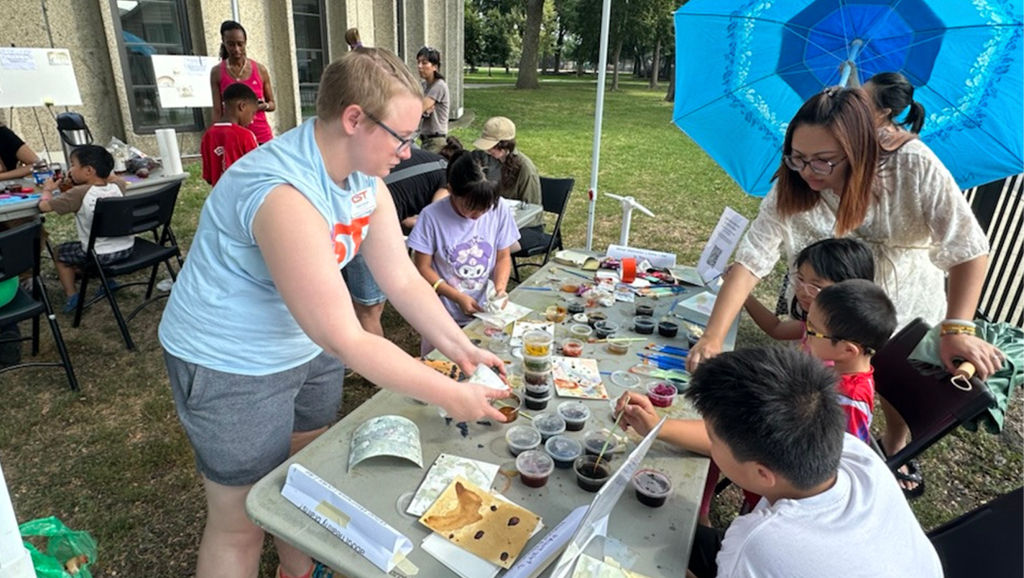
Part of the answer lies in broadening our nation’s investments in research, moving beyond a narrow focus on understanding disease mechanisms to embrace a health solutions science that can illuminate how to keep people healthy, how to deliver care effectively, and how to ensure innovation reaches people in meaningful ways. It is this last point that deeply resonates with the Dana Foundation’s focus on neuroscience and society, particularly our Frontiers program that aims to support innovative engagement opportunities to embed community perspectives in research, policy, and decision-making. Such community engagement will be essential to bring incredible biomedical innovations out of the lab and into the neighborhood—into all neighborhoods.
This work could not be more timely, given that the Agency for Healthcare Research and Quality, one of the few US federal agencies that has been a source of funding for research aligned with health solutions science, is essentially not functional this fiscal year. The Collective has a practical, near-term goal of working to help the field of health solutions science demonstrate its value in ways that are visible, credible, and actionable by generating proof points through funded projects, making the field more visible, and strengthening funding conditions by identifying key opportunities for support.
Importantly, this is a space where philanthropy is uniquely positioned to play a catalytic role, given the flexibility to take risks and make investments that align with long time horizons and without clear, near-term financial returns. We invite other philanthropic funders to join us in this effort and have developed a funder roadmap to share more.
We believe that health solutions science represents an opportunity to maximize the return on our nation’s research investments while reducing inequities in health. This is a chance not just to fund projects, but to help build the conditions for better health outcomes at scale. As stated in the NEJM Catalyst paper: “We call on sectors involved to join us in elevating and building pathways for thriving science that delivers better health outcomes by informing ways to address clinical, behavioral, environmental, social and economic drivers of health: a health solutions science.” We have invested in what medicine can do. Now it’s time to invest in what health requires.