News & Insights
Training Students to Center Lived Experiences in Neurorehabilitation

Knowledge and understanding acquired through direct, first-hand experience can provide valuable insight into health conditions, circumstances, or phenomenon. Philosophers, including the likes of Martin Heidegger and Jean-Paul Sartre, have long been interested in this idea, known as phenomenology. Even before the emergence of HIV/AIDS activism in the 1980s and the disability rights movement of the 1990s, which championed the phrase “Nothing About Us Without Us,” scholars and community members had been calling for science that meaningfully considers lived experiences. But only over the past decade has there been widescale recognition of the importance of lived experience in the field of neuroscience writ large. Researchers have increasingly started to see the direct, research-related value of listening to people who have first-hand experience living with neuropsychiatric disorders.
For the Dana Foundation’s NextGen program, we aim to fund the testing of models that enable students to apply lived experience in their training. However, despite the growing recognition of its importance, there are few examples of courses that enable students to gain this type of experiential learning. Enter: Netta Gurari, M.S.E., Ph.D., an assistant professor in Virginia Tech’s biomedical engineering department.
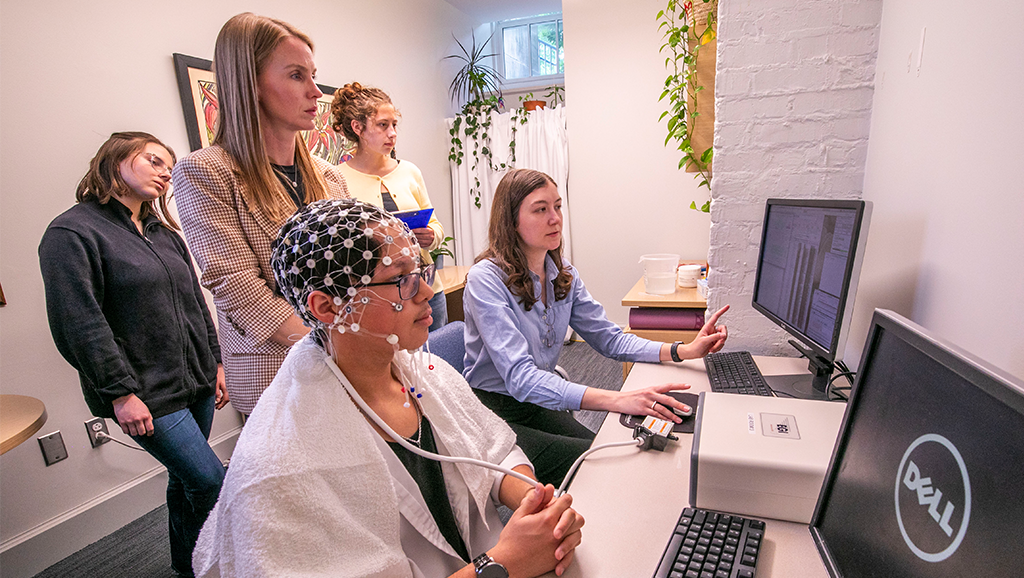
Students in Gurari’s Perspectives in Neurorehabilitation course spend a semester learning about brain injury not only from faculty and clinicians, but from people living with the long-term consequences of traumatic brain injuries (TBIs). The course thoughtfully combines foundational instruction in neurorehabilitation with community and clinical immersion experiences that place lived experience at the center of learning.
On a recent trip to Virginia Tech, I witnessed first-hand how impactful the course’s immersion portion was to students and to the community members living with TBIs. For the students, most of them budding biomedical engineers and neuroscientists, this was one of the first courses to take them beyond the technical and conceptual learning common in higher education and into the real world. Multiple students remarked that although methodologies such as human-centered design were frequently mentioned in other courses, it wasn’t until Gurari’s course that they truly understood what the human in human-centered design meant.
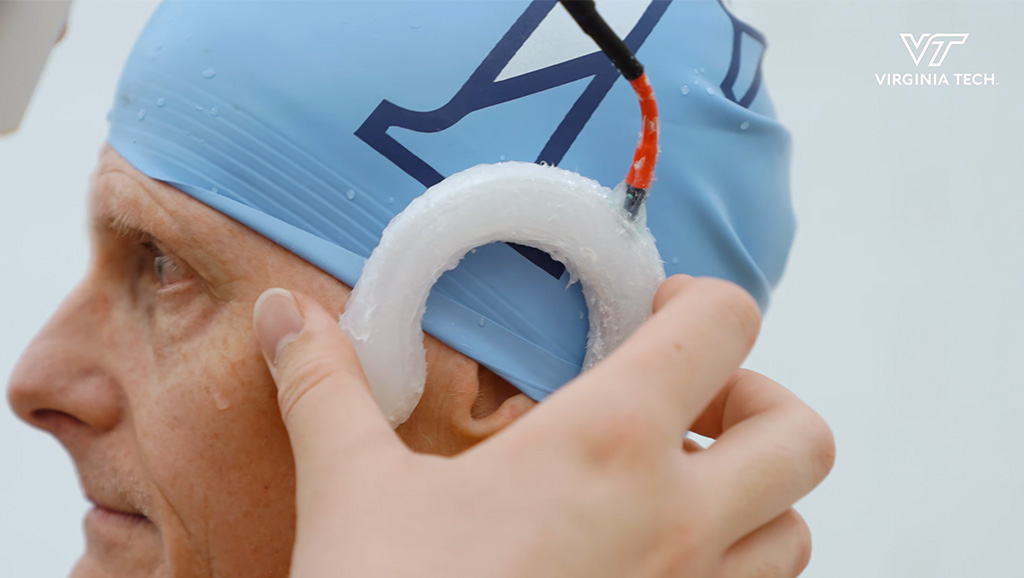
Economist and former university dean and vice-provost, Steven Nape, Ph.D., lives with two acquired brain injuries, a stroke from 2011 and a TBI from a motor vehicle accident in 2017. When I visited Gurari’s lab, Nape explained to me that one symptom many with TBIs face is disruptive peripheral vision. He asked me to imagine that I was driving a car, and an errant leaf flew into my passenger side window. For most people, the leaf would barely register, but for Nape, the leaf felt like a jet plane crashing violently into the side of his car. Nape is an avid swimmer, but given the large number of peripheral stimuli one experiences in a pool, his pastime had become an almost impossible challenge.
Rather than designing for a hypothetical user, Gurari’s students were able to collaborate directly with Nape, who would ultimately use the technology. Over the course of a year, they developed a prototype for adaptive swimming goggles that could help people with TBIs to reengage with swimming and be used by professional swimmers to train for events.
The development of the goggles is a perfect example of the power of centering lived experience in the research process. Students learned firsthand how personal goals, daily experiences, and individual preferences shape successful innovation. Involving community members led to a more thoughtful approach to laboratory science and the development of a product that may better address their needs.
The structure of Gurari’s course is deliberate. Approximately 60 percent of the course focuses on neurorehabilitation concepts including neurophysiology, neurological conditions, rehabilitation principles, and the roles of professionals such as physical therapists, speech-language pathologists, psychologists, social workers, and rehabilitation engineers. The remaining 40 percent consists of immersive experiences, including direct engagement with individuals with brain injury and observation of interdisciplinary rehabilitation teams. Students participate in community visits, clinical shadowing, classroom discussions, and reflective exercises designed to connect scientific concepts to the realities of everyday life after injury.
For neuroscience education, Gurari’s course offers a compelling model of what training can look like when lived experience is treated as expertise. Students are not simply learning about the brain. They are learning how knowledge is produced and translated into real world application, through the integration of scientific evidence, clinical practice, and the perspectives of people whose lives are directly affected by TBIs. In doing so, the course prepares students to become researchers, clinicians, and engineers who are better equipped to navigate the complex relationship between neuroscience and society.