Impact Story
A Summer that Expands What Neuroscience Can Be
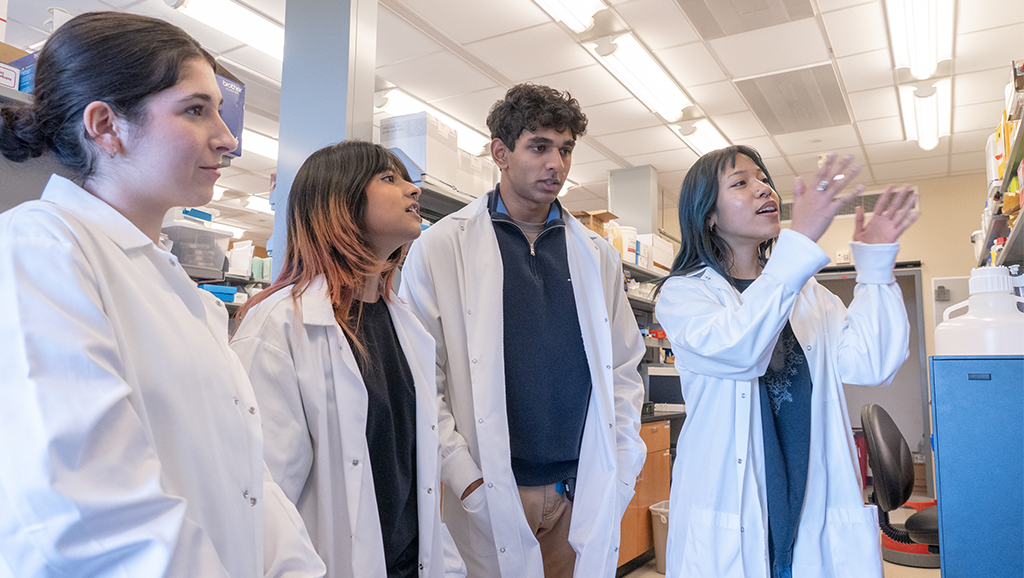
Leadership Alliance scholars in the lab. Photo courtesy of the Leadership Alliance.
How do you know when you’re sure?
When Joshua Gold, Ph.D., a computational neuroscientist at the University of Pennsylvania, put that question to Myla Dahmer at their first research meeting, her answer was candid. “I just kind of make decisions,” says Dahmer, a biology major at Howard University. “You know, I never really thought too hard about it.”
She would spend the next ten weeks building a way to find out.
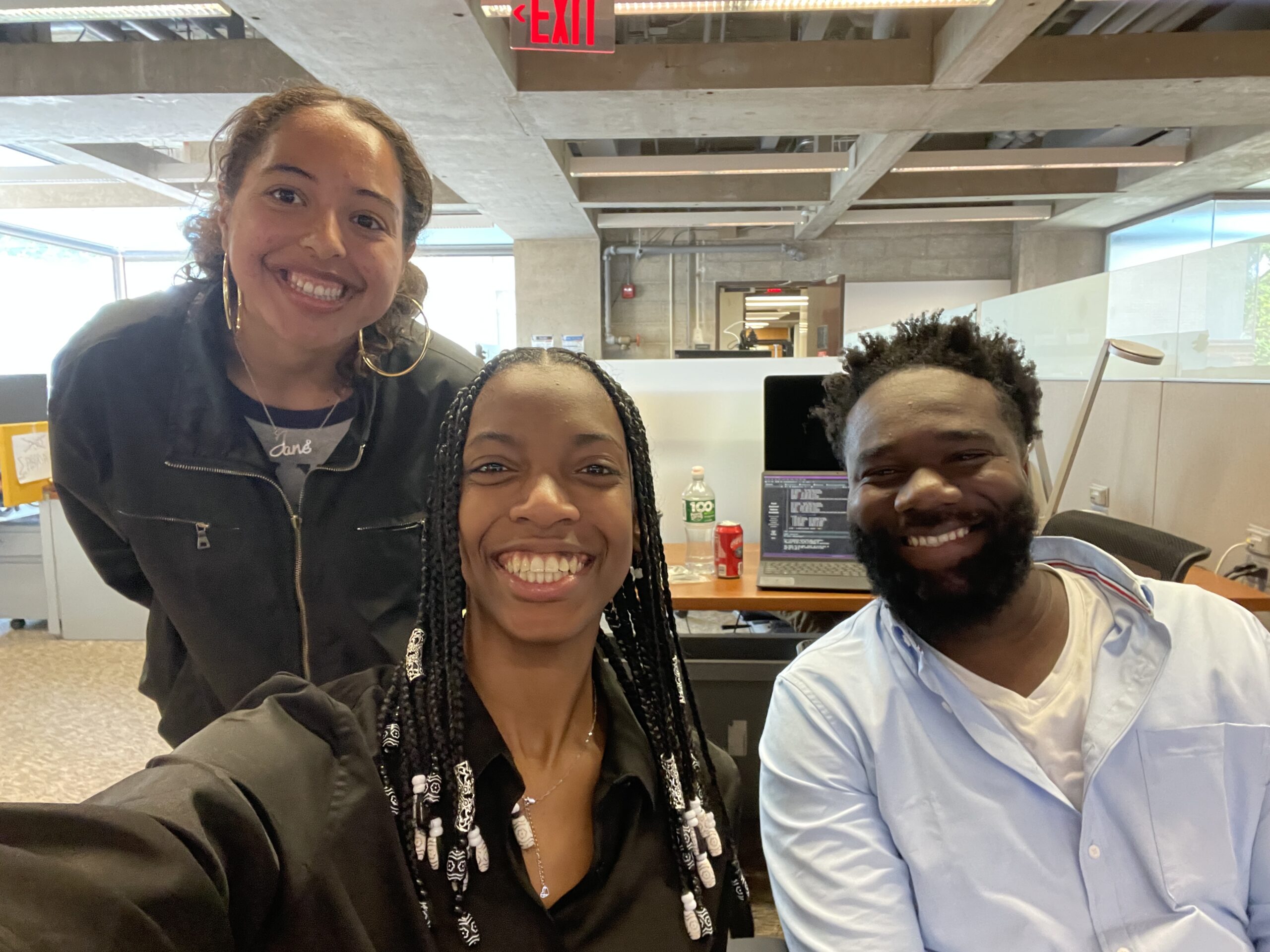
Myla Dahmer, center, a 2026 Dana Foundation Neuroscience and Society scholar, poses with research assistant Jane Baker, left, and mentor Juvenal Bolusu, right. Photo courtesy of Myla Dahmer.
Dahmer is part of this year’s Dana Foundation Neuroscience and Society Scholars Program. The program sits within the Leadership Alliance, a national consortium with a long track record of placing students from schools with fewer research resources into labs at large research universities. The Dana Foundation’s cohort within it adds a second layer: the societal considerations of that research. The foundation wanted to see whether the Leadership Alliance model could also serve students drawn to work that combines neuroscience with other fields.
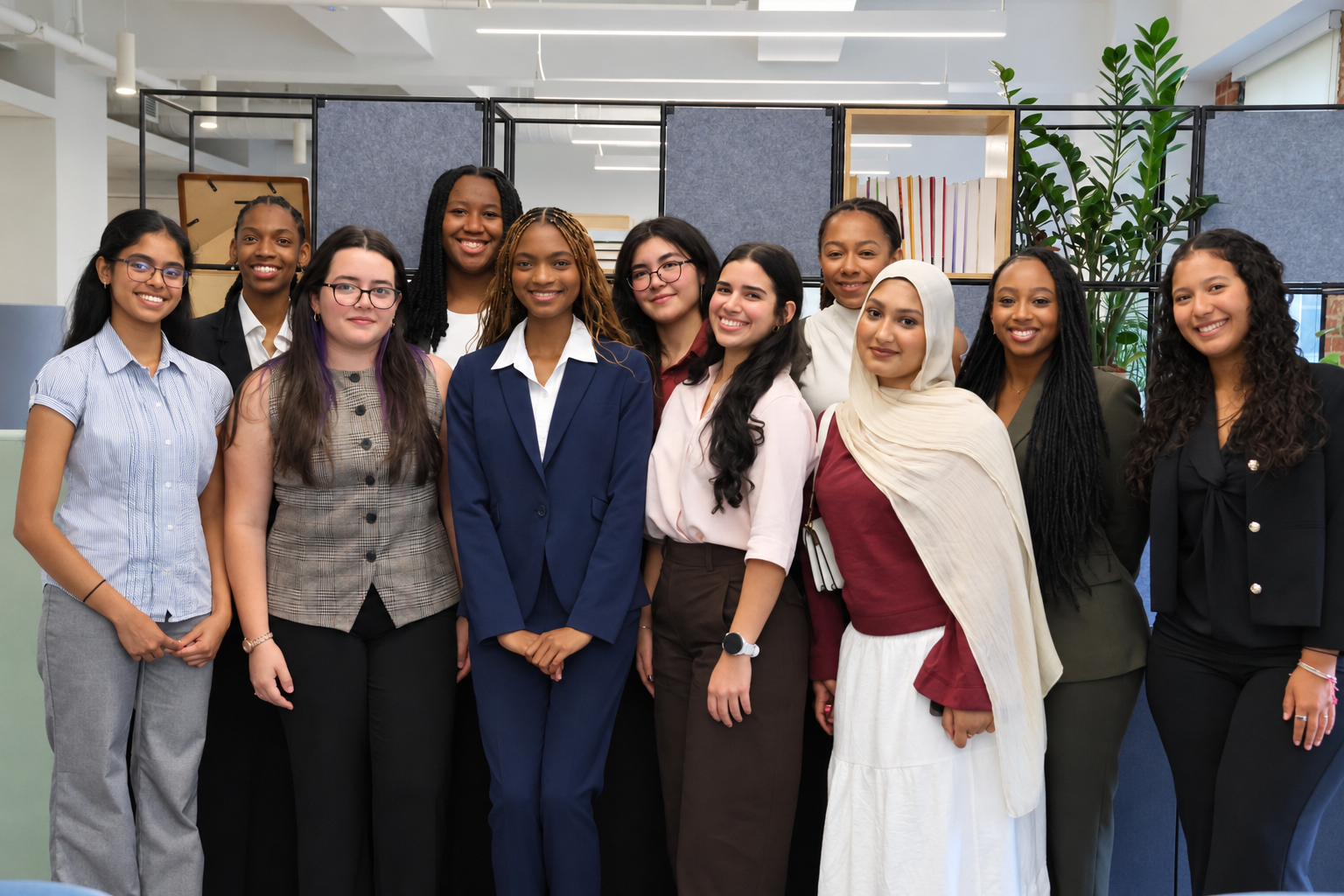
2026 Dana Foundation Neuroscience and Society scholars at the Dana Foundation Headquarters in NYC, July 2026.
“It’s more than just workforce development in neuroscience,” says Ishan Dasgupta, J.D., MPH, director of Dana’s NextGen program, which supports neuroscience and society training and professional development for early career scholars. “It’s workforce development to help students use neuroscience in conjunction with other disciplines, such as ethics, law, and the social sciences, to drive more societally connected work.”
The summer is built for that. Scholars are paired with faculty mentors and do original research. Alongside their lab work, scholars attend seminars on the ethical, legal, and social dimensions of brain science, live together in host dormitories, and present their work at the Leadership Alliance’s national symposium and also at the Dana Foundation’s office in New York. All of them are paid for their work.
Whether they are two months out from the Leadership Alliance program or two years, the scholars describe the same arc. They each arrived at a research question nobody had answered and a mentor who expected them to help answer it. They left more confident in their own judgment, more aware of what their research means outside the lab, and with a wider view of where a career in neuroscience can lead.
Caroline Rezende Mendes (2026 scholar) had done research before, but not where the direction was hers to choose. Her mentors at Brown, one in computational neuroscience and one in economics, answered her questions with questions of their own: What do you think? What do you intend to do? What is the next step? It took a bit to adjust. Then she was mapping out next steps herself. She felt encouraged, she says, to be “an independent thinker.”
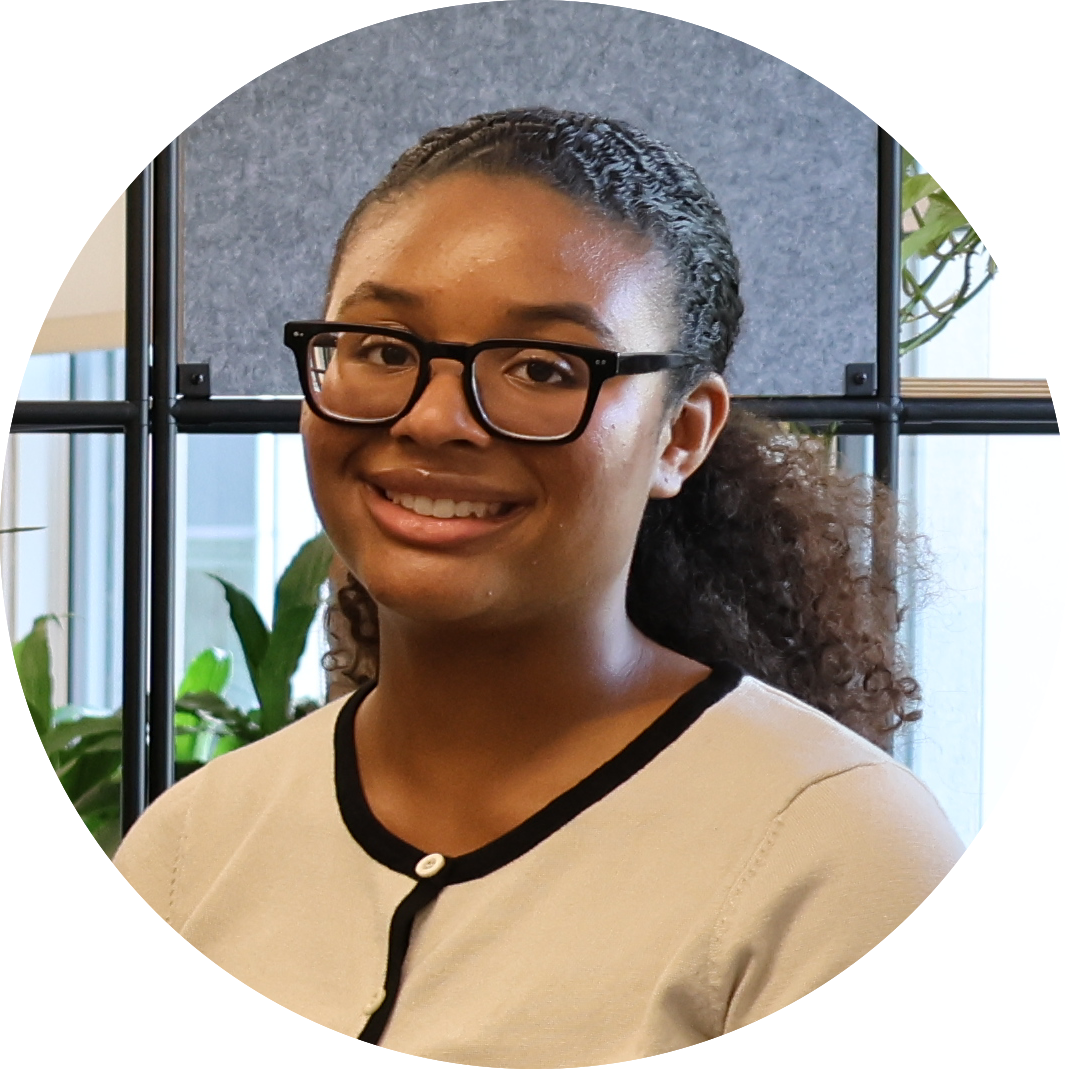
Maya Warner (2024 scholar) spent her summer at Brown University testing whether an early large language model had common sense—whether it knew, for instance, that a hole is by definition empty. Every time her code crashed, she practiced a related skill: deciding how long to work on a problem by herself, and when to take it to her mentor.
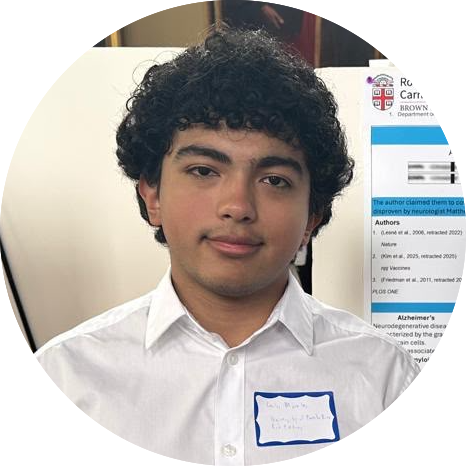
Carlos Morales Valentín (2025 scholar) from the University of Puerto Rico, got to test his own judgment when his mentor, Sarah Ackley, Ph.D., traveled to a conference. “I helped temporarily steer the project towards the path that made the most sense for our goals,” he says. “After, she told me it turned out pretty well, which made me feel more confident in my own decision-making.”
At Penn, Myla Dahmer (2026 scholar) pushed back on her first assignment. Gold had started her on a graph-matching task, and when she tried it on a few test participants, it left them baffled, and her too. She thought a different game, built on the same theory, would work better and be more fun to play. Gold liked the idea and sent her to the scientific literature to make the case.
Support by design
The program pairs that independence with support.
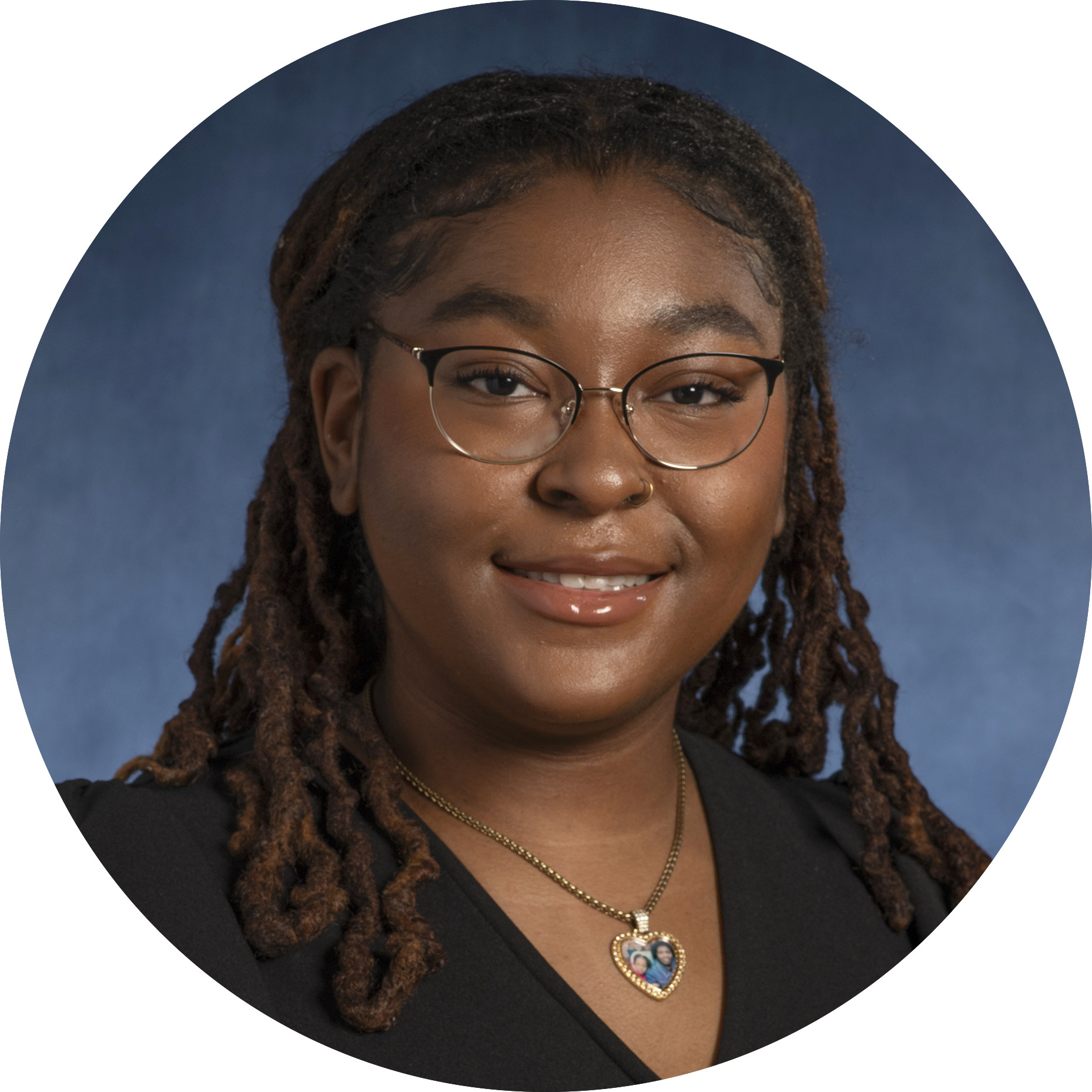
Sydney Whitmore (2024 scholar) arrived at Johns Hopkins University from Xavier University of Louisiana feeling the weight of the name. Meeting her cohort helped. For most of them, it was a first summer of research like this. “I felt a lot at ease,” Whitmore says. Two years later, she still talks with one of them almost every day.
At Brown, Kristin Webster, Ph.D., associate director of training and development at the Carney Institute for Brain Science, built a series of informal Friday lunches where a handful of scholars could talk with local faculty, designed in part to demystify what a professor is. “One of my biggest goals for the summer is to teach undergrads that faculty are humans, too,” she says. These lunches invite six or so students to gather around a table and ask anything.
“Many of them, it’s their first time living in a dorm, their first time away from home,” Webster says. “We really do everything we can to make sure that every student feels comfortable, has what they need to thrive, and knows they belong here.”
Sometimes that meant noticing small things.
Rubaiya Rahman (2026 scholar) went two months that summer without speaking Bengali, and she mentioned to Webster that she had not found good biryani in Providence. The next week, a box of biryani was waiting for her in the fridge, made by Webster’s sister-in-law.
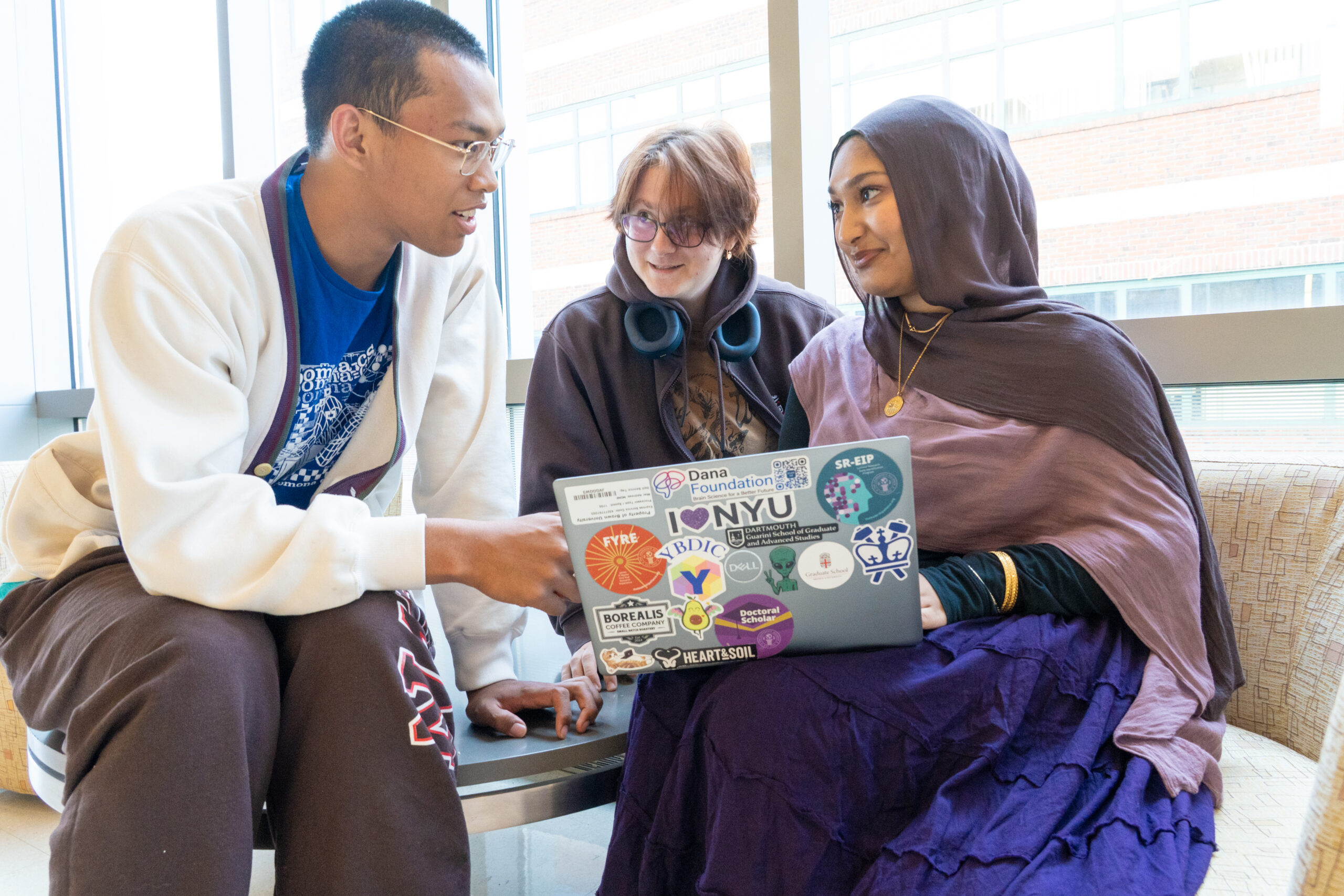
Rubaiya Rahman with two other students. Photo courtesy of the Leadership Alliance.
The social side
For Rahman, the society half of the program was the whole project. With her research partner, Sam Filatov, an English major, she traced the history of eugenics into the present, analyzing how the marketing of gene-editing tools like CRISPR trades on public misconceptions about genetics to promote eugenic ideas. When she presented the work, she used Captain America—a scrawny Army reject, until a serum made him the face of the country—to ask what traits a society decides are superior.
Rahman, who had just finished her first year at Brooklyn College, arrived expecting hands-on work with fruit flies. While she didn’t have the fly-breeding, brain-dissecting summer she had pictured, the hours she spent reading and writing paid off at Brown’s poster symposium in August. “I had so much fun talking about the research,” she says, “but I didn’t realize that I had learned so much up till that point.”
Over in Ackley’s lab, Valentín scraped PubMed abstracts to see whether published Alzheimer’s studies were using trustworthy statistics. He found an unnatural clustering of findings right at the standard threshold for significance—a hallmark of publication bias. As he searched for flaws in the literature, he had to hold his own daily analysis to the same standard. “It really instilled into me that we as researchers also have a responsibility over what is done with our research and how it is interpreted.”
Seeing new career paths
The Dana Foundation has seen evidence of the shift it hoped for. “Students who were otherwise going to pursue a classic STEM career have suddenly begun thinking more broadly,” Dasgupta says. “They might still go on to pursue a Ph.D. in neuroscience, but they are thinking about ways to connect that to other fields and ask research questions that have a more explicit focus on helping specific communities.”
Whitmore had come to Johns Hopkins with her future already planned: psychology, pre-med, aimed straight at medical school. Working with cognitive scientist Monica Lopez-Gonzalez, M.A., Ph.D., she examined the ethical and psychological implications of artificial intelligence on social media, analyzing algorithmic shifts on the social media platform X and their potential effects on young users. She had assumed clinical practice was the only route to making that kind of impact.
“That first experience was what pushed me towards pursuing a Ph.D. instead of going the M.D. route,” Whitmore says. She is now a first-year doctoral student in school psychology at the University of Houston, a field that trains psychologists to support students’ learning and mental health inside schools. Her focus is mental health equity and teacher well-being in under-resourced districts, and she plans to return to the Houston Independent School District, where she grew up.
Valentín came to Brown planning on clinical neuropsychology. The summer turned him toward computational modeling built for populations like his own, underrepresented in almost every dataset.
Mendes, now a senior at Hunter College, is applying to neuroscience Ph.D. programs. “It’s a little hard to be starting over, but I guess I’m not starting over—I’m building on something I already have,” Mendes says, in reference to her past career as a business journalist in Brazil.
For Warner, the view widened at the end of the summer: Rockefeller Center, the Dana Foundation’s office, a conversation with Dana President Caroline Montojo about how she had gotten where she was. “There’s a lot of facets that neuroscience goes into that I was unaware of,” Warner says. Now a senior at Spelman College, she is applying to clinical psychology programs with a neuroscience concentration, aiming to become a neuropsychologist.
Coming back with a plan
Back at the University of Pennsylvania, Dahmer made her case to her mentor with physics.
She recalled a brain-imaging study at MIT she had participated in, where she was asked to look at towers of blocks and predict whether they would fall based on their composition. Everyone is an expert in physics without trying to be, she reasoned: standing up from a chair means solving for mass, angle, and space at once, and nobody realizes they’re doing it.
Over the summer she built a game. Participants watched a digital tower of blocks with pieces missing and predicted which way it would fall. She checked their answers against a computer simulation that toppled each tower a thousand times. Players tended to get the same towers wrong, and on those towers, they also felt less sure.
In a lab meeting, Dahmer started apologizing for a result that looked messy. Gold stopped her mid-sentence. “You realize that you’ve created a full game out of an idea from only two months ago?”
In previous labs, “I’ve always felt kind of like an intern,” Dahmer says. “But I didn’t really feel like an intern there. I felt like a colleague.”
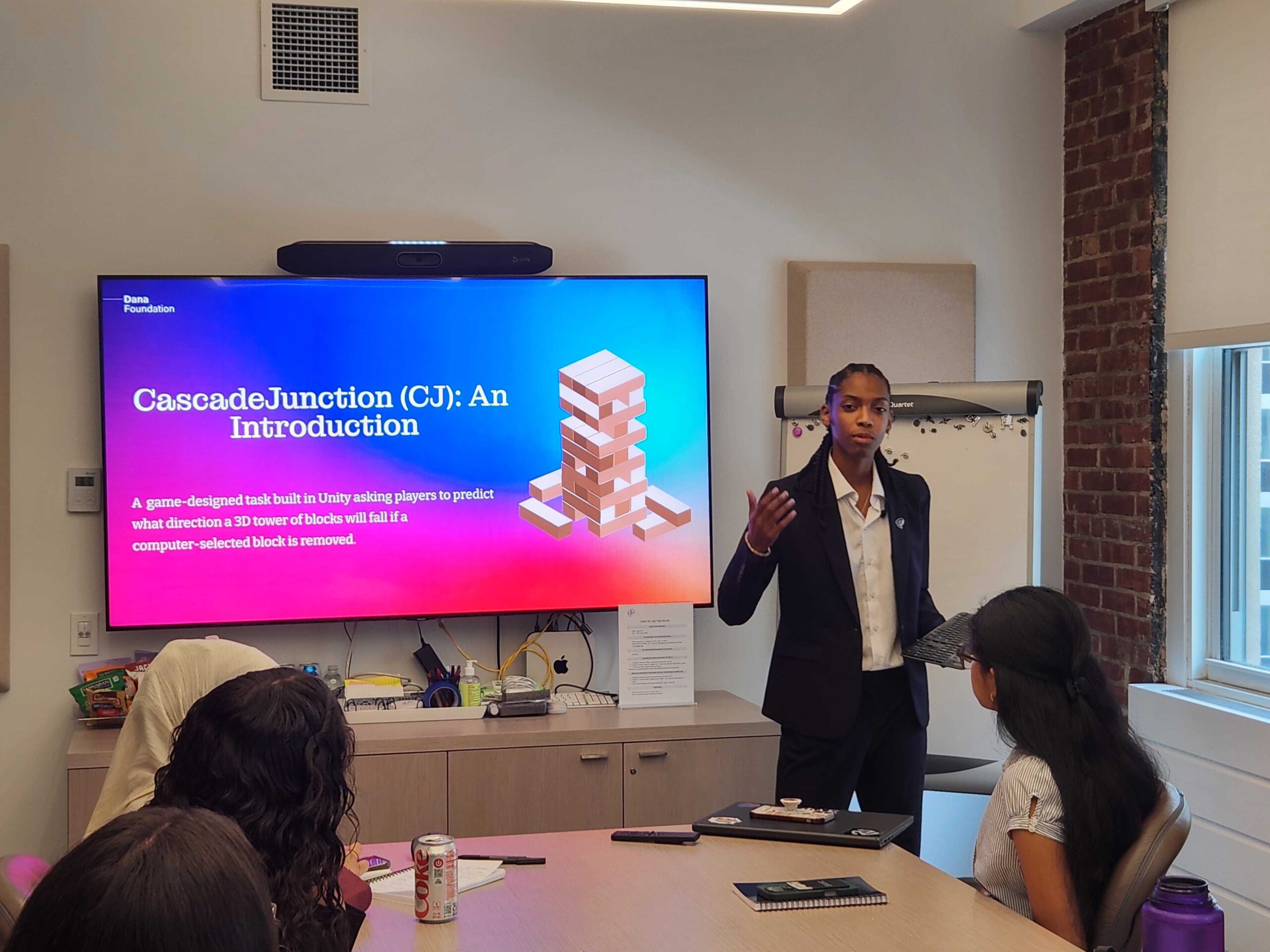
Myla Dahmer presenting her research at the Dana Foundation.
Now a senior at Howard, she is still building the next version of the task, paid as an assistant researcher in Gold’s lab. Penn, a school she once doubted she should even apply to, is her first choice for an M.D.-Ph.D.
What the summer gave the scholars was not a finished plan but a way to make one: a real question, mentors who took their ideas seriously, and time to work out what kind of scientist they want to be while there is still room to change course. “The key is exposing students early on in their careers to these possibilities,” Dasgupta says, “so they have sufficient time to pursue further interdisciplinary training.”
As for Gold’s original question, Dahmer has started to answer it for herself.
How do you know when you’re sure?
“I definitely feel like I gained more scientific confidence,” she says. “I felt a lot more ready to go on to the next chapter.”
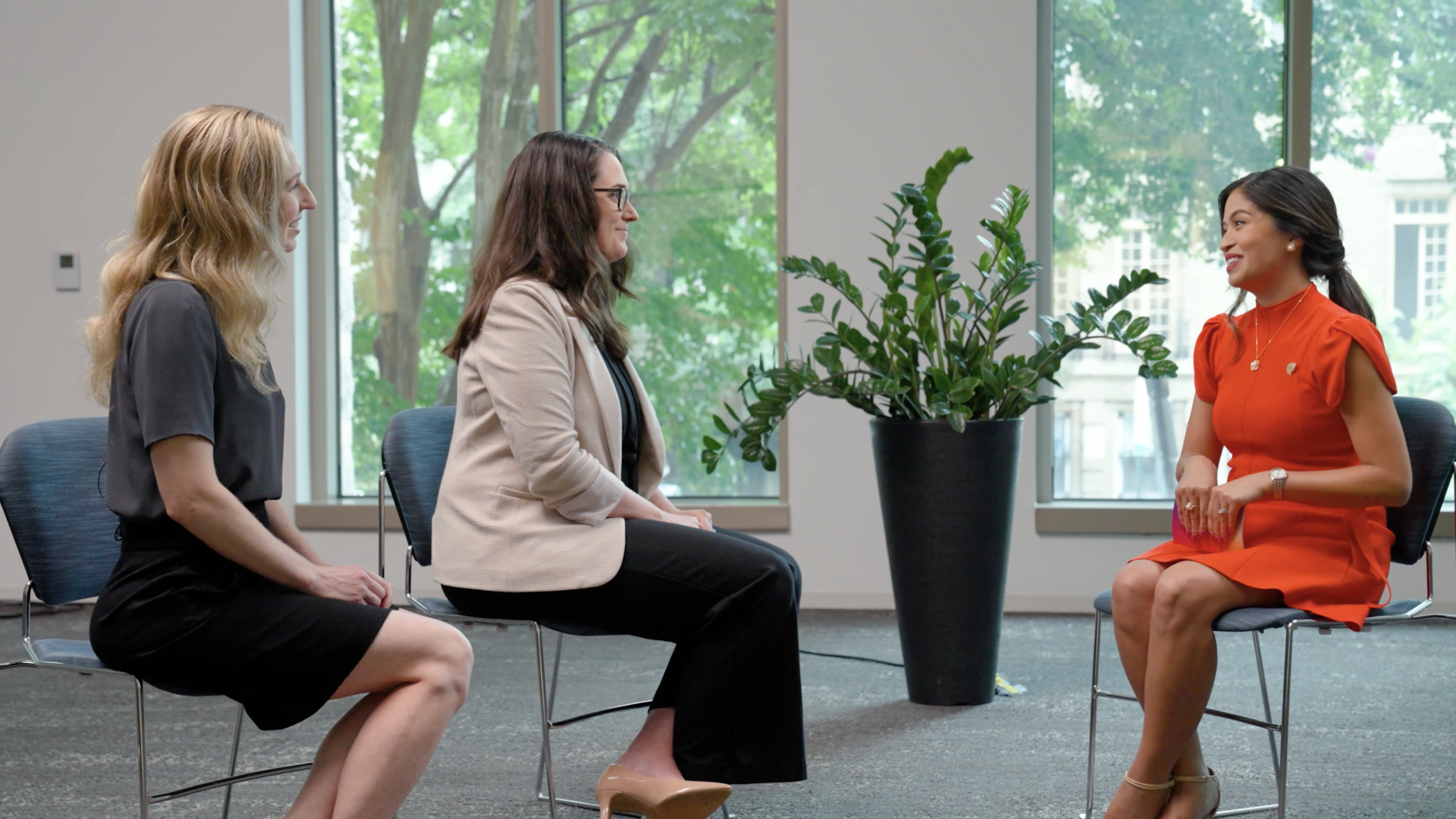
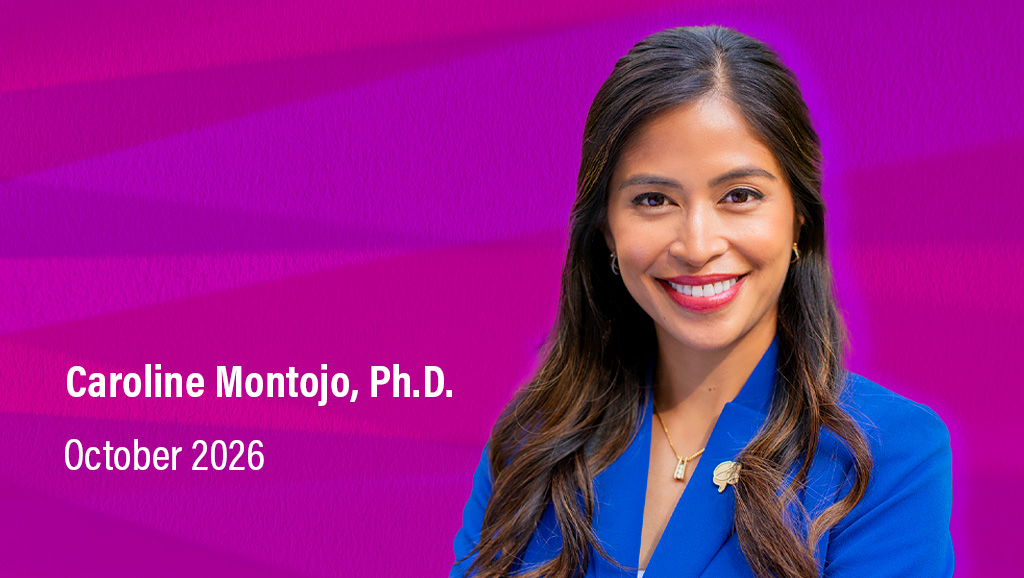
Watch two Leadership Alliance scholars from this year’s Dana Foundation Neuroscience and Society Scholars Program in conversation with the Dana Foundation’s President and CEO, Caroline Montojo, Ph.D.