President's Perspective
Neuroscience in a New Era of Content Creation

A generation ago, someone interested in learning about the brain was likely to turn to the science section of a newspaper, a university lecture, or a magazine feature. Scientific information flowed through relatively centralized institutions that served as trusted intermediaries between researchers and the public. Today, that journey looks very different.
As I speak with friends, family members, colleagues, and partners, I am increasingly struck by how often they encounter science information and news through social media. Whether it is a TikTok video about ADHD, an Instagram post about brain health, a podcast discussing mental health, or a YouTube creator explaining scientific findings, many people are learning about science in places that would have been difficult to imagine as major sources of information just a decade ago.
For organizations committed to advancing public engagement with neuroscience, this shift presents both challenges and opportunities. Concerns about misinformation remain important. But by focusing solely on what these new mediums and messengers get wrong, we risk overlooking what they may be doing right—and why so many people increasingly turn to them to learn, connect, and make sense of issues related to the brain and mental health.
Recent findings from Research!America and Worldview Studio offer valuable insights into this changing landscape.
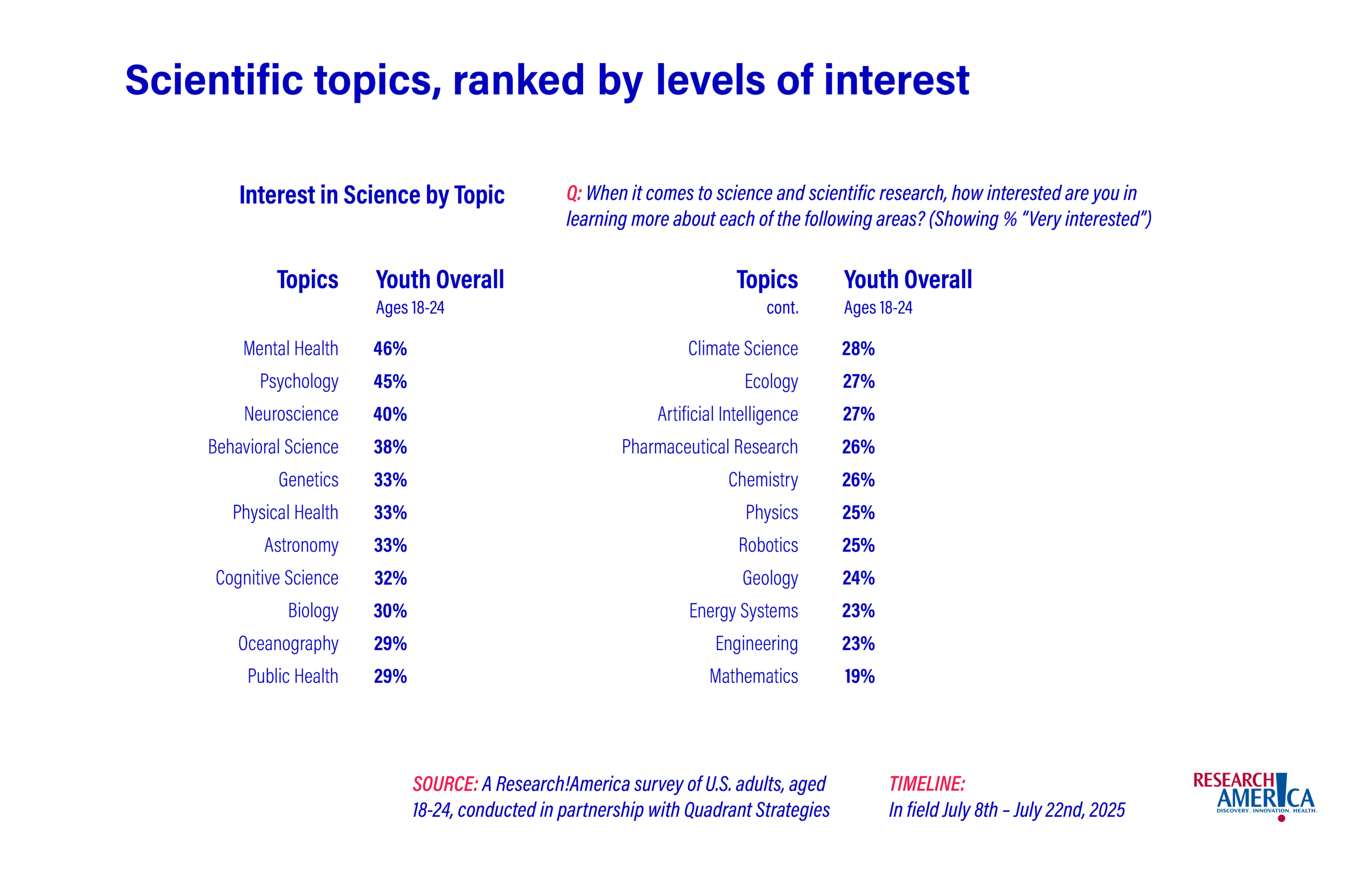
Research!America’s survey of adults ages 18 to 24 found that mental health, psychology, neuroscience, and behavioral health rank among the scientific topics young people are most interested in learning more about. This finding reinforces something many of us have observed: neuroscience is not a niche subject. Questions about mental health, wellbeing, behavior, learning, and human connection are deeply relevant to people’s lives.
The survey also found that young adults frequently turn to YouTube, TikTok, Instagram, and friends and family to learn about science. At the same time, they do not necessarily view social media as highly trustworthy. Young people appear to understand both the value and limitations of these platforms. They use them because they are accessible and influential, while recognizing the need to evaluate information critically.
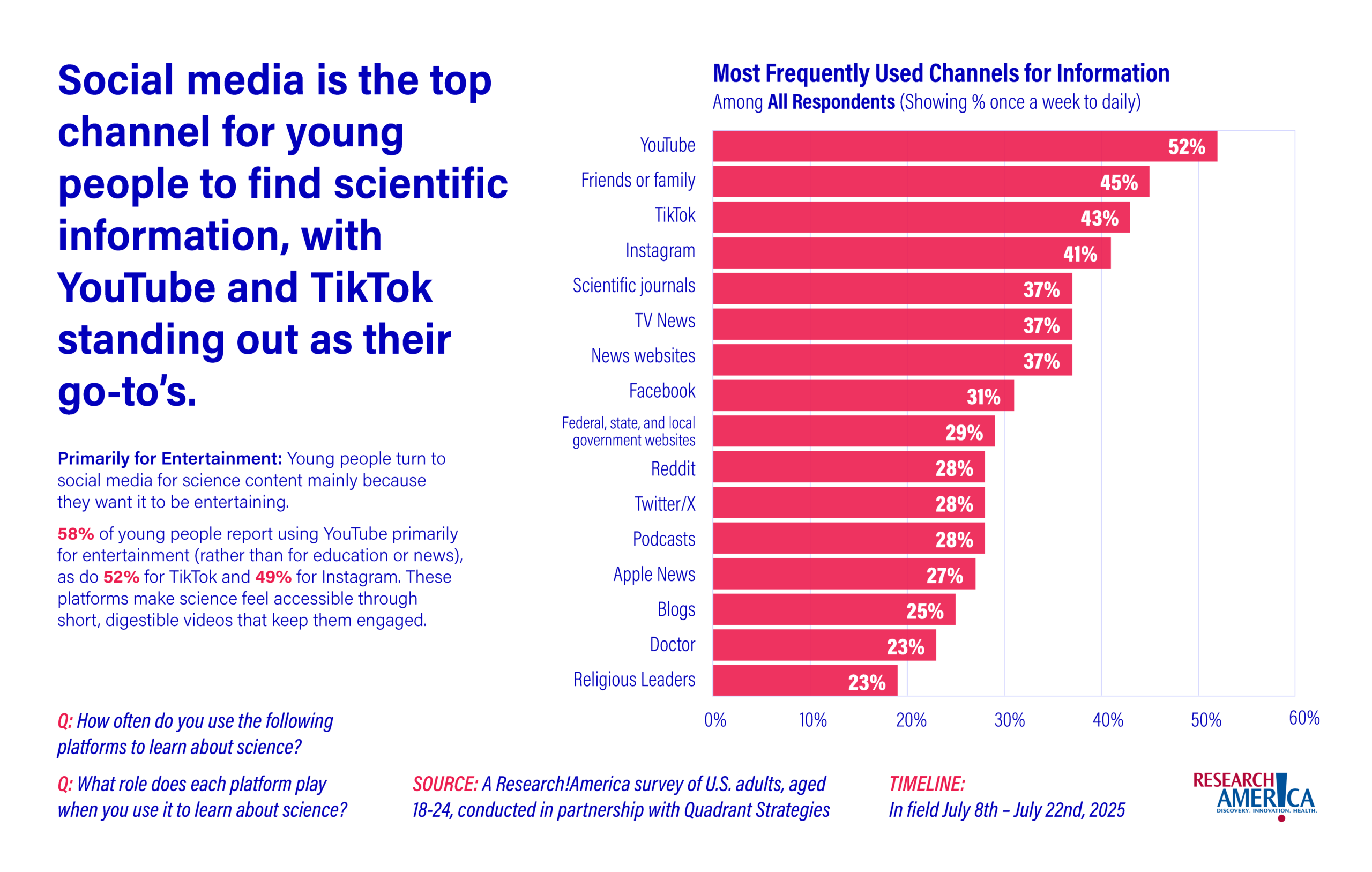
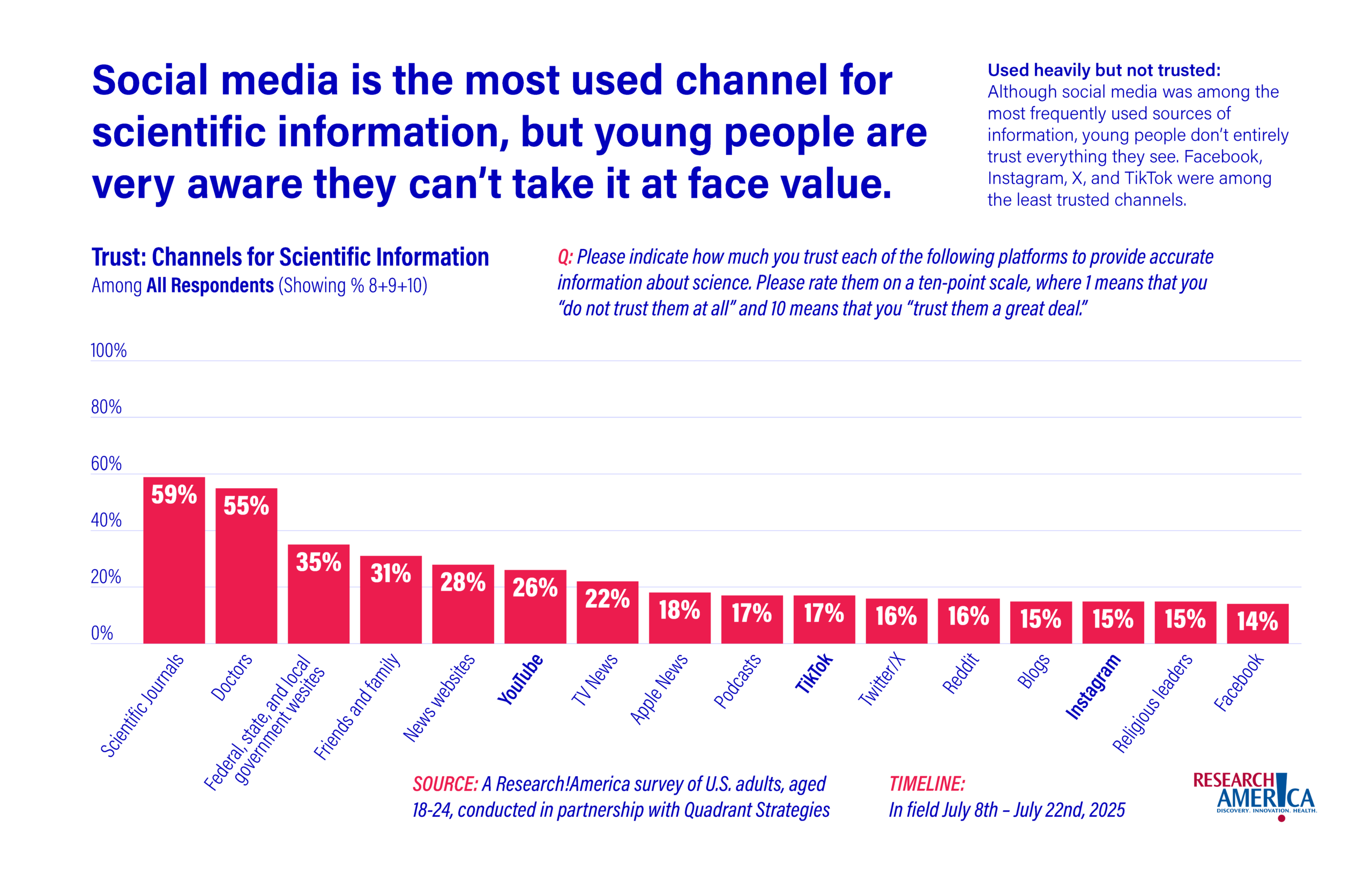
These findings suggest that today’s audiences are not simply passive consumers of information. They are navigating these complex media environments with discernment. But understanding where people encounter neuroscience is only part of the story.
A pilot study from Worldview Studio examining brain and mental health content creators, their followers, and clinicians points to a deeper insight: social media functions not only as an information ecosystem but as a relational one.
People often turn to brain and mental health communities online not simply to find facts, but to find connection. They are looking for understanding, practical guidance, validation, and reassurance that they are not alone in their experiences. This distinction matters.
These insights reveal that many individuals are seeking out these channels to respond to needs that traditional systems do not always meet. For people facing barriers to care, stigma, geographic isolation, or a lack of community support, online spaces can provide connection and belonging that are difficult to find elsewhere.
In this environment, creators have emerged as important intermediaries. Many build trust not through institutional authority but through authenticity, lived experience, consistency, and a demonstrated commitment to the communities they serve. For followers, these qualities are just as meaningful as credentials.
This does not mean expertise has become less important. It means that trust is increasingly built through relationships as well as knowledge. There are important lessons here for the neuroscience community:
- First, engagement is about more than communicating information. People engage with neuroscience because it helps them understand experiences they personally care about. Effective communication must acknowledge those motivations.
- Second, creators and online communities can offer valuable insights into the questions people are asking and the challenges they are facing. Rather than viewing these voices as separate from the neuroscience ecosystem, we should consider how they might become stronger partners within it.
- Finally, the findings highlight the importance of meeting people where they are—not only on the platforms they use, but in ways that reflect how they build trust, seek support, and make meaning.
For neuroscience funders, this moment presents an opportunity. We can support approaches that combine scientific rigor with authentic engagement. We can foster partnerships among researchers, clinicians, creators, and communities. And we can invest in understanding the rapidly evolving environments where conversations about the brain and mental health are already taking place. While a more decentralized media ecosystem undoubtedly creates new challenges, it also offers new possibilities for participation, dialogue, and connection.
The future of neuroscience engagement will depend not only on the quality of the information we share, but on our ability to understand the communities we hope to reach. As audiences increasingly seek neuroscience information through social and community-driven channels, our task is not simply to communicate more effectively. It is to listen more carefully, engage more thoughtfully, and build trust in ways that are both scientifically grounded and deeply human.
Recommended Reading
From Principles to Practice: Advancing Neural Organoid Research for Societal Benefit
From Discovery to Hope: What Federal Investment in Science Makes Possible