President's Perspective
From Principles to Practice: Advancing Neural Organoid Research for Societal Benefit

The resulting report, Toward Global Oversight of Human Neural Organoid and Assembloid Research, describes substantial common ground. Participants wanted this research to move forward responsibly. They also recognized that guidance must keep pace with new scientific capabilities and be useful to the people making decisions in laboratories, review committees, journals, and funding organizations.
Two commitments in the report stand out to me. The first is participation. Patients and advocates should help shape research priorities and governance from the outset. Donors and communities should have opportunities to raise questions that researchers may not anticipate. International coordination matters, and it must make room for different cultural values and priorities.
The second is adaptability. We need to monitor developments, revisit difficult questions as evidence changes, and translate broad principles into clear guidance. That includes guidance on donor consent, animal welfare, and when specialized review is warranted. It also means being candid about what we do not yet know, including whether future models might develop capabilities that call for different ethical consideration.
Neither of these two commitments can be met through communication alone. In a recent STAT essay, Michelle Groman of The Greenwall Foundation and I argued that trust grows through relationships and shared work. In this field, listening to patients, donors, and communities can improve both the questions we ask and the way we pursue answers.
The Asilomar report is a starting point. The Dana Foundation’s next step is to help catalyze a collaborative effort that turns its principles into practical guidance, broadens participation, and keeps that guidance current as the science evolves.
This work cannot belong to one foundation, institution, discipline, or country. Funders, researchers, professional societies, journals, review bodies, patient organizations, ethicists, legal scholars, and community partners all have a role. I hope they will join us in building an approach that allows neural organoid research to advance with care, accountability, and a clear sense of the people it is meant to serve.
In September, a team including neuroscientist Sergiu Pașca reported a striking advance in Nature. The researchers transplanted human stem cell–derived cortical organoids into mice, where the tissue grew extensively and formed connections with the animals’ nervous systems.
For people affected by neurodevelopmental or neurodegenerative conditions, models like this may offer a way to study human neural cells and circuits that have been difficult to observe. The work is still at the research stage, but it opens possibilities for understanding disease and, eventually, testing potential treatments.
It also makes questions about responsible research more immediate. How should we assess the welfare of animals receiving human neural tissue? What should people know when they donate cells that may be used to create organoids or transplanted into animals? When does a study call for expertise beyond a review committee’s usual scope? These questions deserve sustained attention alongside the science.
These are not new questions for the Dana Foundation. In 2021, we helped support the National Academies of Sciences, Engineering, and Medicine consensus study examining the science, ethics, and governance of human neural organoids, transplants, and chimeras. It examined questions of consent, animal welfare, oversight, and public engagement that remain relevant today.
As the research advanced, we saw a need to bring more perspectives together. In November 2025, the Dana Foundation and Stanford University’s Wu Tsai Neurosciences Institute supported a gathering at Asilomar of 70 scientists, ethicists, patient advocates, journalists, and policymakers. There, I joined representatives of the International Society for Stem Cell Research and the Society for Neuroscience for a discussion on how governance could support valuable research while addressing its ethical, legal, and societal dimensions.
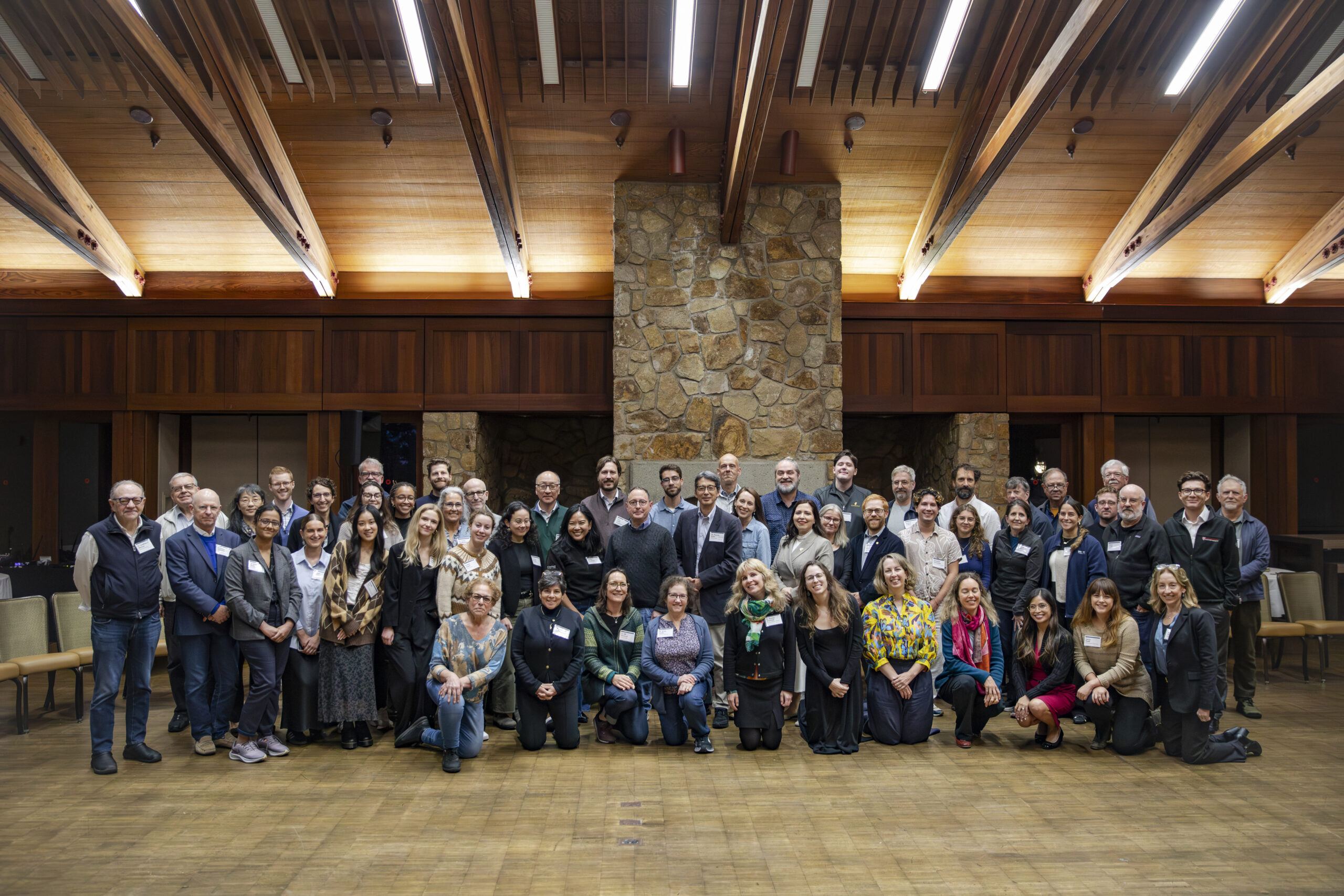
2025 Asilomar Conference. Photo courtesy of Alison Fell, Worldview Studio.