News & Insights
New Possibilities, New Responsibilities in Neuroscience


For much of Walter Koroshetz, M.D.’s career, neurology was known as “diagnose and adios”—a bleak shorthand for a field that could identify neurological disorders but offer patients few treatment plans. Today, advances in gene therapy, brain-computer interfaces, and tools that can record and modulate neural activity are beginning to transform what is possible for people with neurological conditions.
Koroshetz, former director of the National Institute of Neurological Disorders and Stroke (NINDS) and a senior advisor to the Dana Foundation, believes neuroscience has reached a tipping point. But as new technologies move from research laboratories and medical settings into other areas of life, scientific possibility is raising an equally important set of societal questions. How can the field pursue necessary treatments while anticipating potential harms? And how can science and society guide the use of neurotechnology together?
“The danger is always that technology gets ahead of the social contract,” says Koroshetz in a new episode of NeuroSociety Stories.
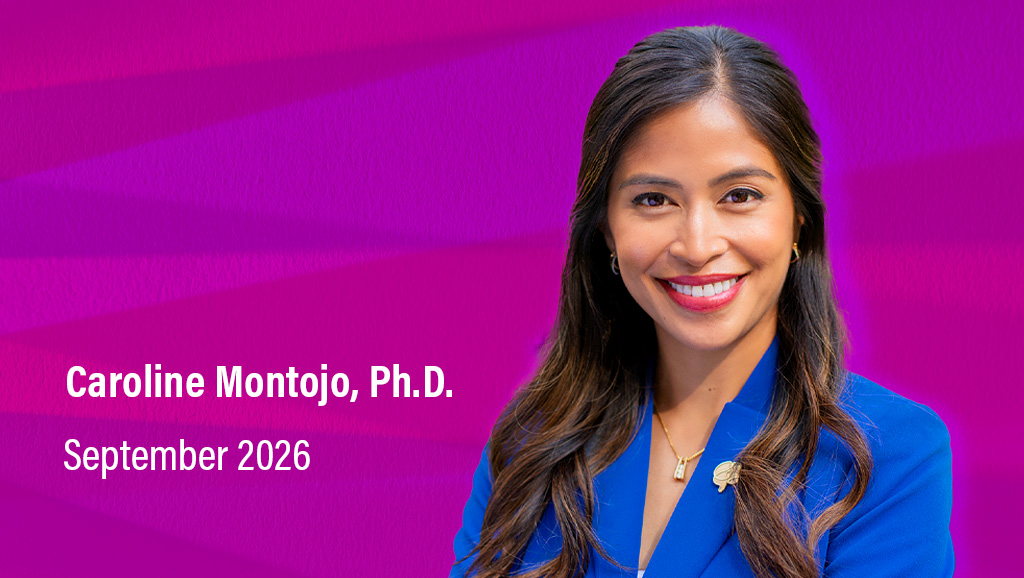
In conversation with Dana Foundation President and CEO Caroline Montojo, Koroshetz reflects on a career spanning clinical care, research, and national leadership in neuroscience. He discusses the accelerating pace of discovery, the ethical questions accompanying advancements in neurotechnology, and the need for a renewed social contract that keeps public benefit at the center of science.
Koroshetz’s priorities as a leader were shaped by years spent caring for people with severe neurological conditions. That experience taught him that the timeline of research can look very different to a scientist than it does to a person living with a progressive disease.
“The people with ALS, they say, ‘You’re doing this research for ten years. I’m only going to live for three,’” he says.
That urgency guided his work at NINDS, where he served as director from 2015 to 2026 and co-led the during its early days. Over his career, Koroshetz watched neurology progress from a field with few treatment options to one producing advances he describes as “almost miraculous.” Gene therapies can now alter the course of conditions such as spinal muscular atrophy, while experimental brain-computer interfaces are restoring communication for some people with paralysis.
“Big advances in science come more from new tools than they do from new ideas,” Koroshetz says. By bringing together tools from molecular and cellular neurobiology, genomics, and the study of brain circuits, he sees new opportunities to help people living with neurological, psychiatric, and substance use disorders.
Yet technologies developed to treat disease may also find uses far beyond medicine. A device that stimulates the brain to reduce seizures, for example, could point toward tools intended to enhance student learning. Brain-computer interfaces that enable a person with paralysis to communicate in real time might eventually be adapted to control vehicles or other complex systems. These possibilities raise questions about safety, fairness, access, autonomy, and, ultimately, who benefits.
Koroshetz argues that these questions should be considered before the technologies become commonplace. Early in the BRAIN Initiative, he helped establish the Neuroethics Working Group to guide the initiative through the ethical and societal implications of emerging research.
In medicine, evidence about a technology’s risks and benefits can help determine where and how it should be used. Outside medicine, Koroshetz says, the path is less defined. Building a social contract for neuroscience will require communities to understand what is at stake, deliberate about possible uses, and help government and other institutions make informed decisions. Its “North Star,” he says, must be a deceptively simple question: “What is good for society?”
For the next generation of neuroscience scholars, meeting this moment will require more than technical expertise. Koroshetz encourages researchers to nurture a sense of responsibility to others and incorporate it into everything they do. The goal is not only to advance what neuroscience can achieve, but to ensure those advances meaningfully improve people’s lives.
The episode reveals a future for neuroscience filled with extraordinary promise, and choices that cannot be left to scientists alone. Staying ahead of those choices will require public discussion grounded in the realities of the technologies taking shape today—and in a shared vision of how they can best serve society.
Watch Koroshetz’s full episode below and find previous episodes of NeuroSociety Stories on YouTube.
TRANSCRIPT:
This transcript has been lightly edited for length and clarity.
CAROLINE MONTOJO, HOST: Welcome to NeuroSociety Stories, a series created by the Dana Foundation that explores the incredible ways that neuroscience is shaping society. Through engaging conversations, we invite Dana Foundation grantees, partners, and other neuroscience and society thought leaders to share stories of discovery, innovation, and impact.
Each episode offers unique perspectives on how brain science intersects with fields such as ethics, law, social sciences, and more advancing neuroscience for the good of all. I’m Caroline Montojo, president and CEO of the Dana Foundation. Join us as we uncover how neuroscience can drive change, inspire new possibilities, and create a future that reflects the aspirations of all people.
MONTOJO: Walter, welcome to the Dana Foundation. Thank you for joining us. Feel free to have a seat. I think this will be really inspiring.
MONTOJO: Science in the United States is being actively reshaped. Changes in policy, technological advances, and shifting public perceptions of science are all influencing how research is funded, conducted, and communicated. As part of NeuroSociety stories, were exploring what it means to reimagine the future of science in the US, and how decisions made today will affect its relationship with society moving forward. So how can leaders of science institutions balance research and innovation with societal responsibility? And what does it take to guide research systems through this historical inflection point for science in a way that builds trust and broadens impact?
Today, I am delighted to be joined by Walter Koroshetz, former director of the National Institute of Neurological Disorders and Stroke, whose career spans clinical care, research, and national leadership in neuroscience. He also recently joined the Dana Foundation as a senior advisor.
Walter, welcome again to the Dana Foundation. Very excited to have you with us today.
WALTER KOROSHETZ: Good to be here.
MONTOJO: Before we start off on gathering your thoughts on the future of neuroscience, I’d love to hear a bit more about your story. You trained as a neurologist and you spent years treating patients before you moved into your leadership role at the National Institute of Neurological Disorder and Stroke, the nation’s leading federal funder of neuroscience. Can you share a bit about what drew you from clinical practice into shaping directions for brain science, and what, from your clinical experience, helped to influence your priorities as a leader?
KOROSHETZ: I think we’re all kind of a product of our upbringing and experiences. And throughout my career, I was always kind of one foot in the lab, one foot in the clinic, sometimes two feet in the lab, and sometimes three feet in the clinic—I’ve gone back and forth. I thought it was just fantastic to be able to combine those two avenues with the purpose of trying to improve health. That’s what it’s all about. And, so for me, ending up as a neurologist who was trying to improve the health of people with really severe neurological disability, which can really be tragic not only to the person but to the whole family.
One thing, when you are working with folks who have a neurological disorder, they’re on a different time zone than you are. So, the people with ALS, they say, ‘you’re doing this research for ten years, I’m only going to live for three.’ You have to think about ALS time. Urgency is something, and the kind of need to really bear down and go as fast as you can to get answers for people, comes from those kind of experiences. And I think the other thing, which is true about all of medicine, one of the things we learned right from the beginning is that our job is to do no harm. And, and I think that as a physician doing some really avant garde treatment, in some cases it didn’t work out well and I feel guilty that there was harm that was caused by the things we were trying to do. But I think once you have that experience, that carries on to the work that you do, say, at NIH. But the key at NIH is always to try and advance health to come up with more effective therapies, and in my case, for people with neurologic diseases. So it was a very rewarding career.
MONTOJO: That’s wonderful, Walter, I especially appreciate your mention of the different time zones. I think sometimes on the research side, we’re thinking about the experiment and how to conduct the experiment. But thinking about that impact—who can use that information, that knowledge for their health, I think, is a very important point.
KOROSHETZ: Well, I think on the academic side, what people think about is ‘how do I get a paper published’ and ‘how do I get promoted.’ And the people with the disease, they don’t care about that. What they wanted to see—and that’s what the taxpayer investment in NIH wants to see, is results that can help people.
MONTOJO: Absolutely. Walter, I’d love to hear your thoughts on the trajectory of your career path and your leadership roles. You’ve led the National Institute of Neurological Disorders and Stroke through many major shifts in neuroscience, including the launch of the US BRAIN Initiative and the founding of the Traumatic Brain Injury Center. How would you characterize this moment for the neuroscience field? What is different about this time?
KOROSHETZ: Well, when I came out of training, neurology was considered ‘diagnose and adios,’ which means we diagnose you, but we can’t really help you. We just give you a diagnosis. And that was really sad. But what happened over my career is, little by little, effective treatments started to come. And now I think we’re on like an exponential curve. So I think that’s the biggest news for people with neurologic diseases —that things that were untreatable, say, spinal muscular atrophy, which would cause infants to die within a year. Now with gene therapy, [the infants are] playing and they’re not on respirators, and it’s almost like a miracle. So we’ve seen miracles in neurology and the clinical neurosciences. And these all come from fundamental research where we learned about the disease and technologies that come into the field that kind of allow things to happen that could never happen before. And right I think we’re at a tipping point because we have a convergence of three areas of science coming together at the same time.
If you look at most of the Nobel Prizes and the major work in neuroscience under my career, it was all what we call molecular or cellular neurobiology. And then came the genomic revolution. So that gave us understanding of the genetic underpinnings of many disorders, but also it gave us information about how we can manipulate the gene information for health. But the big part that was missing, particularly about the brain, is how the brain processes information. The brain is the most amazing information processing device known to man—outperforms any computer. But we don’t actually know how it works. We know the little pieces. You know, the electric firing here, electrical firing there. But what’s really happening is millions of neurons are firing simultaneously in these patterns. And we know kind of what the letter is, we don’t know the words, we don’t know the phrases. We don’t know the sentences, the paragraphs, the chapters. And that’s where we really have to make some progress.
Through the BRAIN Initiative, we have made a lot of progress in that space. The BRAIN Initiative was all focused on how the brain processes information circuits, and now we have tools where we can map these circuits, we can monitor the activity of millions of neurons at a time, and we can actually modulate activity. Bringing those three things together, the genomic tools, the circuit tools, and the molecular tools I think is really a powerful combination that is going to allow us to do so much more about taking care of people who have mental, psychiatric, substance abuse disorders.
MONTOJO: When you talk about the BRAIN Initiative, I can really sense your excitement around the tools and technologies that were developed to better map the circuitry of the brain, and it hasn’t been that long since the initiative was launched.
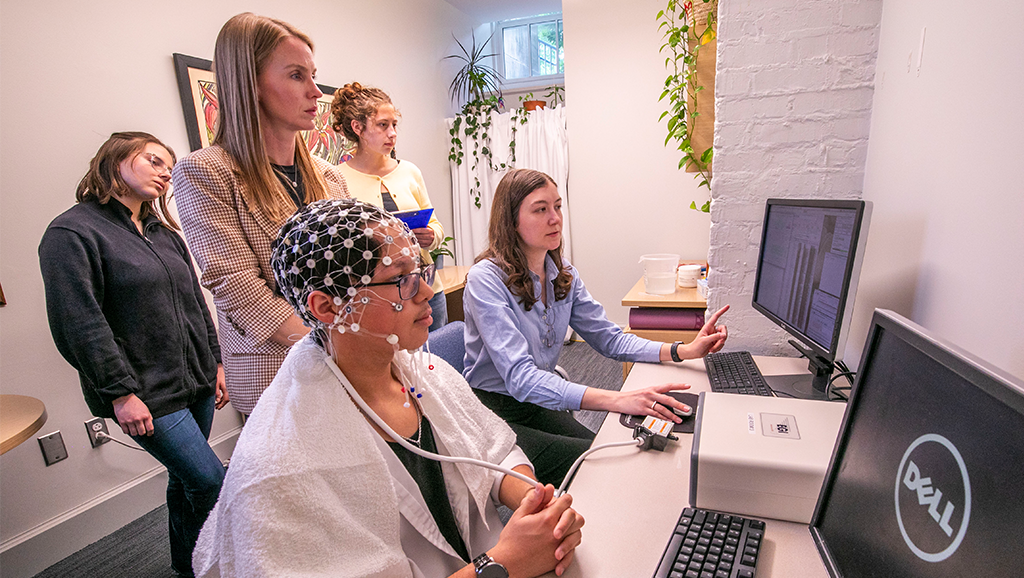
KOROSHETZ: No, absolutely. I think we just celebrated our 10th anniversary last year. I mean, just to think about it, the tools that we were using to look at how brain circuits work with EEG, which is a technology in the 1920s, but now you can actually look at the firing of millions of neurons simultaneously in awake, behaving animal. You can look at and map the circuits and all the connections in something like a Drosophila, but even pieces of human tissue. We always say in the BRAIN Initiative that big advances of science come more from new tools than they do from new ideas. And I think that’s what we’re going to be seeing. And already I think the tools are kind of bleeding into clinical care, because we have now devices that are what we call closed-loop stimulation, where people with Parkinson’s or obsessive-compulsive disorder or pain can have electrodes that can detect the signal inside the brain that these problems are going to come up, and then the stimulation can be driven, that’s linked to that pickup to make the pain go away or improve the OCD component, or stop a seizure or improve somebody with Parkinson’s. This closed loop stimulation is probably the thing that we’ve seen come into patients now from the BRAIN Initiative, but there’s a lot more coming. I think the future is really, really going to be amazing. I hope I’m around to see it.
MONTOJO: Well, based on the pace of advances over the past ten years, I think that’s very possible.
KOROSHETZ: Yeah. Very possible.
MONTOJO: Moving now to the Dana Foundation’s mission. I think one of the areas that we think a lot about when it comes to neuroscience advances and tool and technology development are the ethical and societal questions that come up. You were talking about deep brain stimulation—closed-loop, deep-brain stimulation, which is just incredible to me. Can you share about how you think about the role of neuroethics and patient engagement when it comes to these new advances?
KOROSHETZ: Before the BRAIN Initiative even got off the ground, I was asked to come and talk to the President’s Bioethics Commission. And boy, I got my hand slapped because I wasn’t really as sophisticated as I needed to be about the ethical issues that we were facing, and there were really smart people there. And so right from the beginning, we started a neuroethics working group to guide the BRAIN Initiative, as it was negotiating a lot of these social, ethical implications of the new technologies. So I think it’s so important that we continue that and we actually expand it.
Medicine has a history of new technologies coming in. And in general, what happens is, a new technology comes in and it’s adopted and it’s overused. And then people find out where the technology really belongs, and it’s usually a down curve and then it finds a plateau. So, I’m very confident that in the medical space, we’re going to be able to do that in terms of stimulating the brain or recording from brain for particular purposes, like stopping epilepsy or treating people with Parkinson’s disease or substance abuse. What we don’t have a handle on is these tools going out of the medical space—and that’s where I think society really needs to start thinking about these things before they happen.
If I have a tool that can stimulate your brain to stop epilepsy, I’m certain that somebody’s going to develop a tool that can stimulate your brain so that you learn calculus faster now. All right. So your child is in school. Do you want to give him this technology so he can learn his calculus faster? Now, his other friends in the class, they may not be able to afford this. Just an example of something from the education space. In other areas, we have now brain computer interfaces where electrodes in someone’s brain, we can take the activity. We can send it through a computer. That person who’s completely paralyzed can now talk through the computer at real time. If you can talk through a computer, that’s great for someone who has, say, ALS and is paralyzed. But you can control someone’s voice, you can control their movement, you can control them driving a car, you can control them potentially driving a fighter jet. So how this spreads into society—and all the aspects of society—these have big implications.
A lot of the things that we’re talking about, people do have a sense of it, but they got it from science fiction. Some of the things we’re talking about doing, they’ve been in a movie before—maybe not to the extent that, we’re talking about possibilities. I think that there’s an appetite for people to think about these things, but they have to get past the science fiction side and try and think about what is the right thing for society? How do these technologies get used for the good of society? I think that’s the critical question.
MONTOJO: That’s a very interesting point about sci-fi and media, because when I talk about the Dana Foundation’s mission in neuroscience and society, especially in the context of all of these new neurotechnologies, the first things I hear are about movies and TV shows that talk about this. And while I think that it can be very helpful to have examples of that, it’s not the whole story. So being able to have discussions that are really grounded in the realities of these technologies is important.
KOROSHETZ: Absolutely.
MONTOJO: So, Walter, looking ahead now to the future of science, there’s quite a bit of discussion going on around how can we rethink the relationship and strengthen the relationship between science and society. I’d love to hear your thoughts on what a renewed social contract for science could look like. What would that look like in practice, and how would you think about neuroscience in that social contract?
KOROSHETZ: Yeah, I think that’s really the million dollar question, Caroline. If I think about it with my medical hat on, what happens in the medical space is that there is evidence that’s collected on the risks and benefits of a new technology that comes in, and then people can look at the evidence and make the right decision about where that technology really sits. That’s what I’d love to see in the non-medical space. I must say, I’m not exactly sure how that happens. I think it’s probably going to be up to people in the community who think really deeply about this and can message to a larger group about the importance of making these kind of educated decisions. And then I think it’s probably going to be up to government to make decisions. The consumer, in terms of what they’re going to buy, what they’re not going to buy. And I think the North Star or the Social Contract has really got to be what is good for society, what is good for society. And that might change over time. But I think unless our citizens become aware of what the issues are and see them in totality, as opposed to a one off here and there, we’re going to be behind the eight ball in trying to get to a social contract in our country that we can feel good about. The danger is always that technology gets ahead of the social contract, and I suspect that’s going to happen, but that doesn’t mean we don’t keep trying, because then we can always be involved in pulling things back to get to that North Star point.
MONTOJO: This makes me think about AI as an example of what you’re talking about. What happens when we get ahead?
KOROSHETZ: Very similar situation. The difference here is we’re talking about information that’s coming out of a brain, an individual person’s brain. So that’s a little different because you are what your brain allows you to do—what it’s doing, one day to the next. Now, unfortunately, an advertising company might want to know what’s going on in the brain that makes you want to buy something or not buy something, and use that information for their benefit. So I think all sorts of things are going to start flowing, and it’d be good to get ahead of it, because I think when it comes, it’s going to be a barrage. I think the advantage of the Dana Foundation is I think the Dana Foundation is really way ahead of the game in trying to get these ideas across to people, get people discussing them, and kind of promulgating this discussion throughout large numbers of people.
MONTOJO: Thank you, Walter. It’s really interesting to hear you talk about the brain and how consequential it is in thinking about the ethical and societal considerations, even relative to large language models, which have already had a significant impact on society. So it’s very helpful to hear that.
I know you’re very passionate about the next generation of scientists. I’ve seen you speak about it, and also really helped to mentor many of the scientists and scholars who have come through the NIH. I’d love to hear your thoughts on what type of training and experience you think a next generation of neuroscience scholars need to be able to navigate this new world, as well as to navigate the kinds of ethical and societal questions that you brought up earlier.
KOROSHETZ: Yeah. Good point. Caroline, I think things certainly change in terms of the training ecosystem. And one needs to really adapt to the way things are now as compared to they were when I was training in the 70s. I think there are certain kinds of principles that don’t change. I think how you prosecute those principles may change, but at the end, you know, we’re all human beings in a society, and I think our brains are put together so that we have a real sense of trying to contribute to that general society. I wouldn’t fight that circuit in your brain. I think you want to nurture that and use the technologies that come along to help you get to that place where, you know, we’re all mortal beings and I think what we want to do is to feel that we feel fulfilled by what we’re doing in life, so that at the end we can say, well, some things I didn’t do well, but, you know, overall, I tried, and I feel good about what I did. You have to keep that overarching humanitarian sense, which I think all—almost all of us are born with. And to nurture that along and incorporate it into everything you do. So, a philosophical answer to a philosophical question.
MONTOJO: Walter, thank you so much for joining us at the Foundation today. It’s wonderful to speak with you and to hear your thoughts about the future of neuroscience and how we can think about a social contract where neuroscience deeply benefits society.
KOROSHETZ: Well, thank you, Caroline, it’s a pleasure chatting with you today and looking forward to working with Dana Foundation in the future.