Should students have access to smartphones during the school day?
It’s a hotly debated topic. While there have been a swath of surveys and studies suggesting that cellular telephones can result in greater distraction, poorer focus, lower test scores, and increased classroom disruptions—there are also research studies to suggest these technologies can improve student outcomes when used with proper guidance. Despite somewhat contradictory research results, more than 40 states have now passed legislation to restrict if not outright ban cellular telephone use during the school day. But not everyone is a fan of these new policies, which often vary not just state to state but classroom to classroom.
Educators, scientists, students, and parents continue to argue the merits of smartphones within the school context. Two teachers at the School for Science and Math at Vanderbilt (SSMV), a joint venture between Vanderbilt University and Metropolitan Nashville Public Schools, believe that student-led research on cell phone use in the classroom could better inform the discussion.
Menton Deweese, Ph.D., a neuroscientist and director of SSMV, which provides students with an interdisciplinary, research-centered high school experience, and Pamela Popp, Ph.D., a postdoctoral research scholar in cognitive science and instructor at the school, decided to develop a unique curriculum, Students are Scientists. This educational program allows the school’s freshmen and sophomores to design, implement, and analyze their own experiments on cell phone use—and then present their results to school district leaders. The Dana Foundation funded the development of this novel program in 2025.
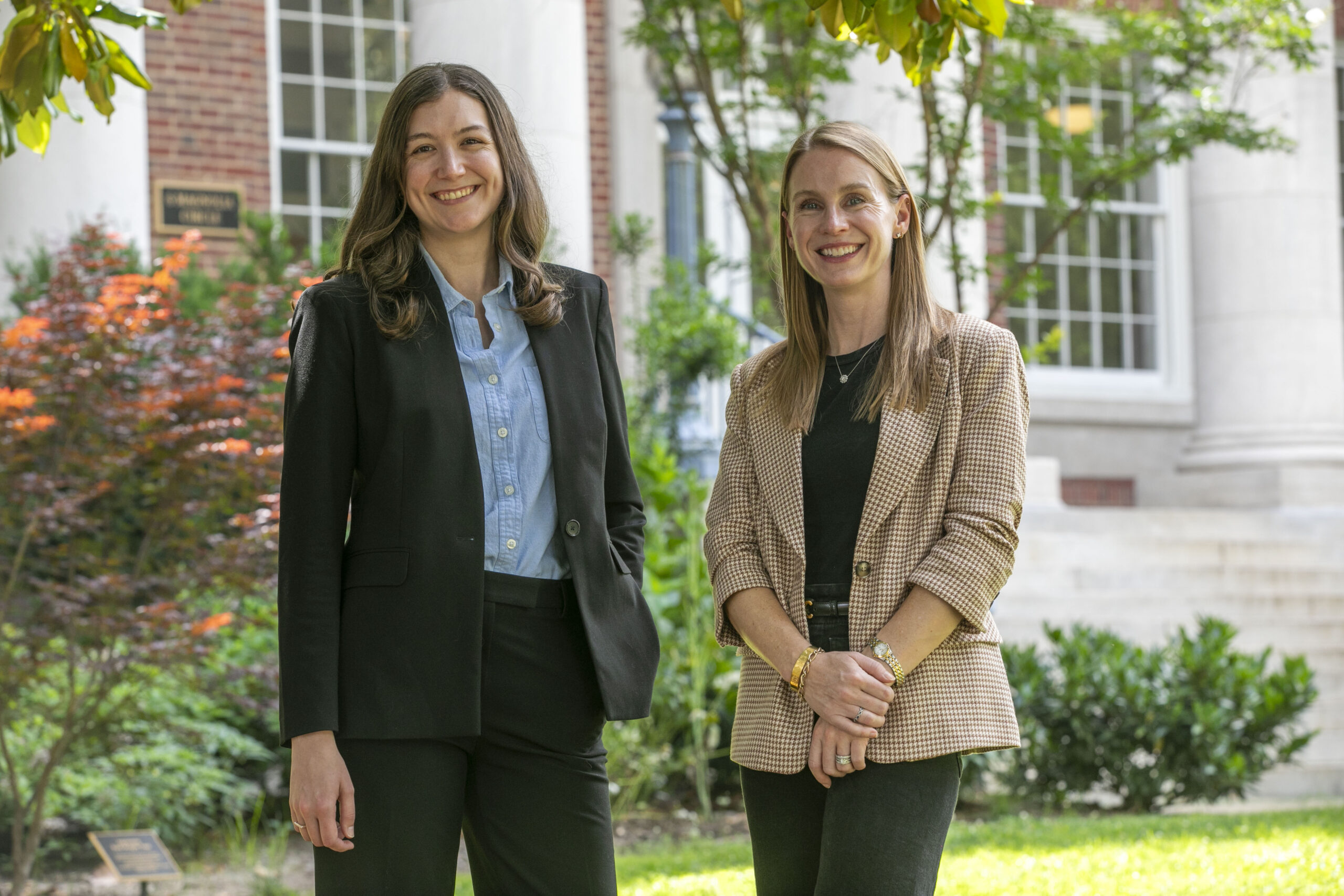
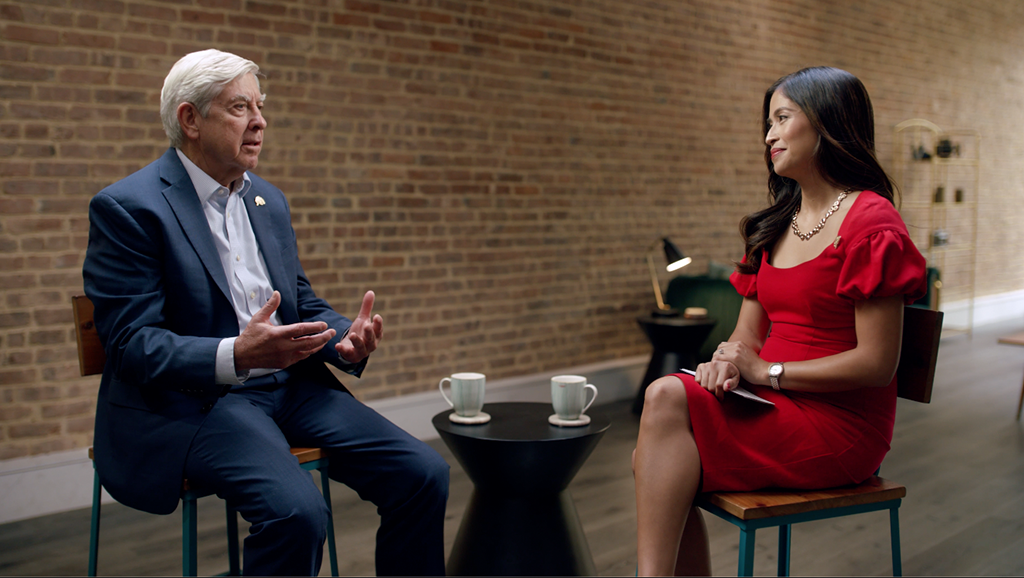
From left to right: Pamela Popp, Ph.D., Menton Deweese, Ph.D. Photo courtesy of Pamela Popp.
Popp said what makes this semester-long participatory project unique is that it brings together psychological science and policy on a topic that students are incredibly passionate about.
“Tennessee passed a law in 2025 stating that all schools needed to implement policies restricting smartphone use in the classroom. This is something that teachers need to manage, and everyone is doing it a little differently,” said Popp. “The students have a lot of thoughts on what they like and what they don’t—and being able to examine use in an empirical way gives them a new way to contribute to the conversation—a conversation which is often led by the people who didn’t grow up with smartphones the way today’s students have.”
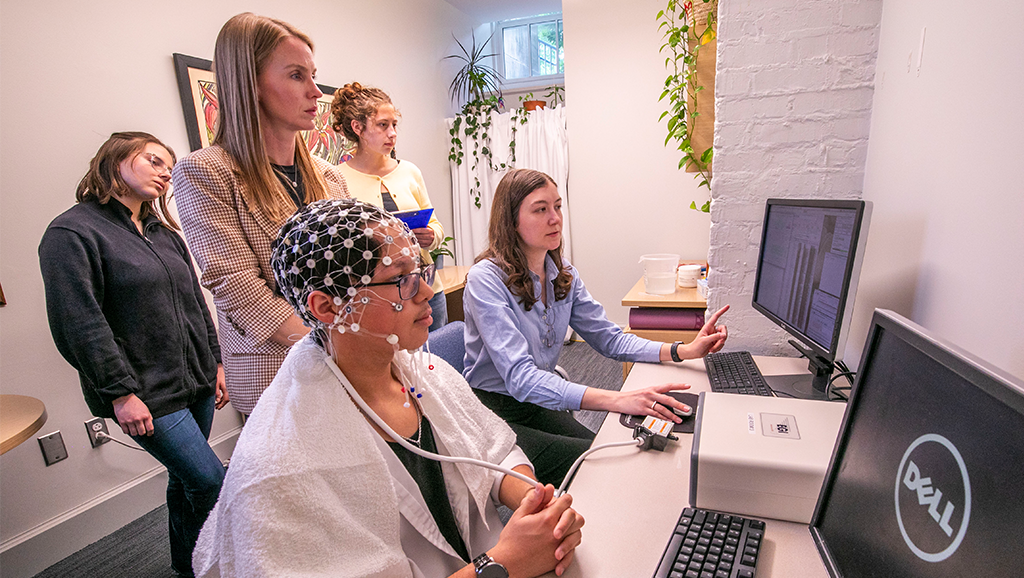
In Fall 2025, twenty-six students taking a sophomore-level course on research piloted the new curriculum. The unit included several guest speakers who discussed the existing research on smartphone use in the classroom. But the crux of Students are Scientists was a hands-on research project. The students designed and then ran their own experiments to see how smartphones affected learning and attention using classic psychological measures like the Stroop and Flanker task. They then analyzed the data and presented their results to the class, as well as to members of the Metropolitan Nashville Public Schools board. In addition, six students continued their work in the spring by conducting electroencephalogram (EEG) studies, adding some brain data to the psychological results.
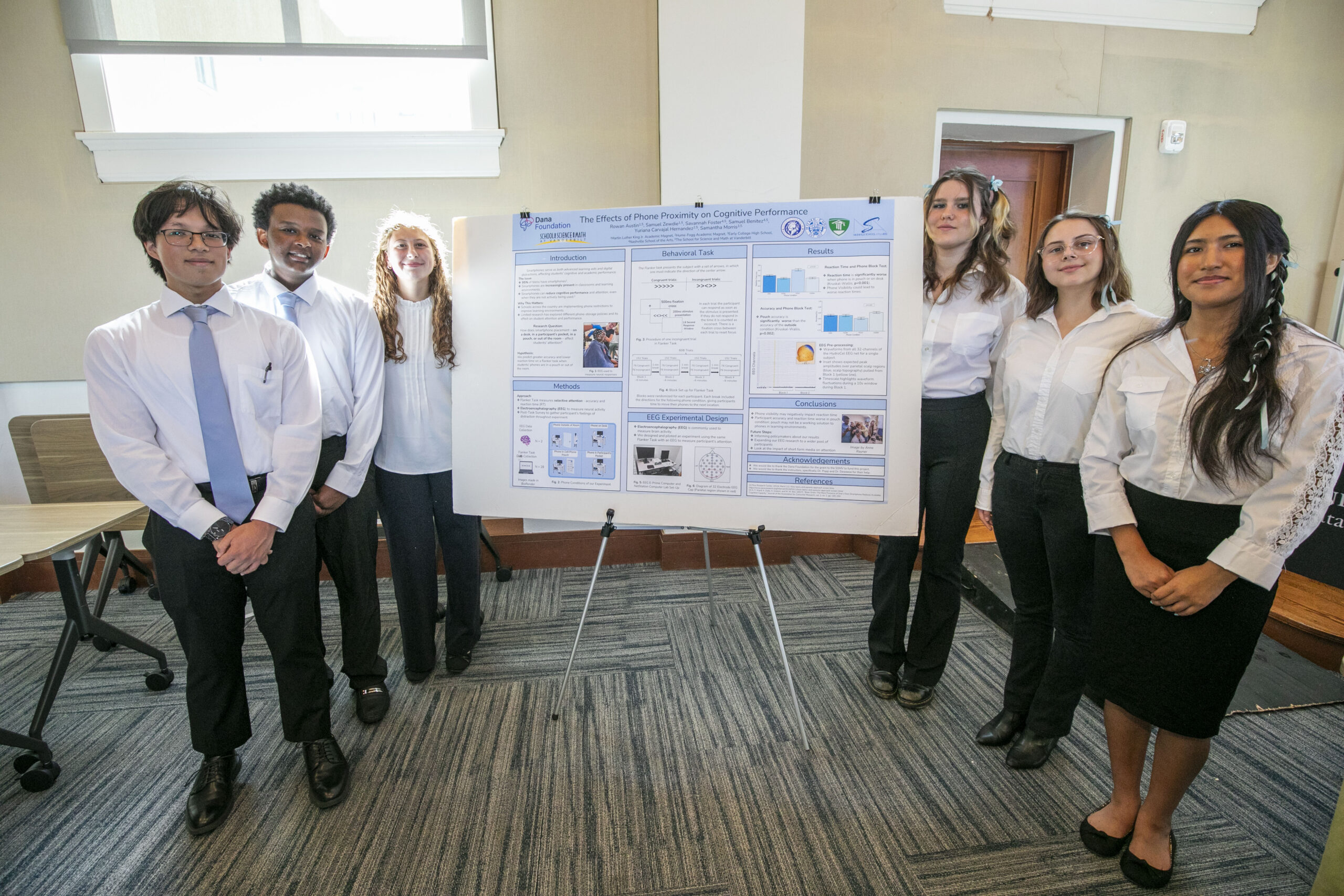
Photo courtesy of Pamela Popp.
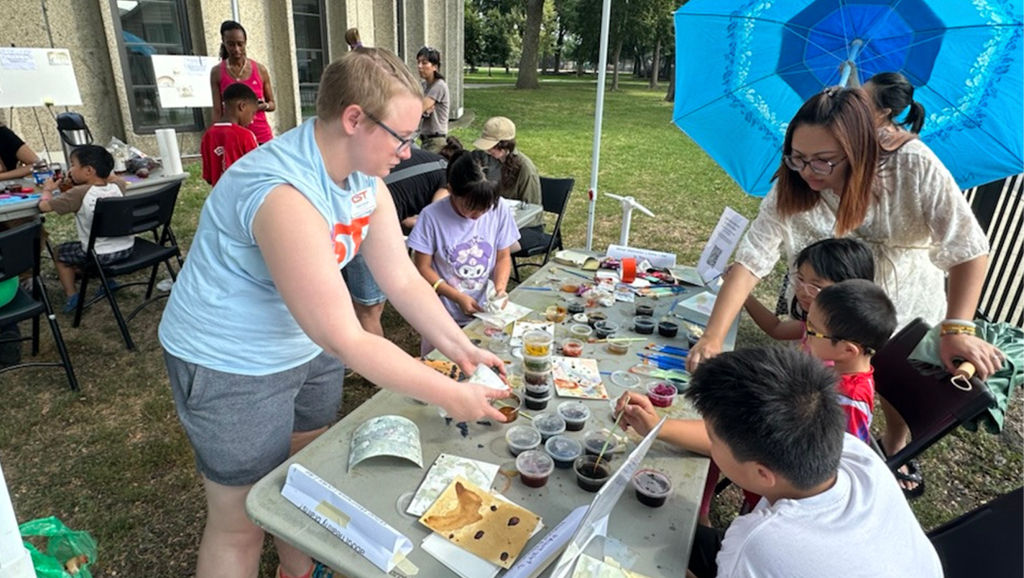
“These students learned how to use the EEG, collected data on themselves and their classmates, and then presented at a poster session this summer,” said Deweese.
Deweese said the students learned, when they manipulated the placement or proximity of the phone, it did affect attention—but not always in the way that other studies suggested it would.
“The students found some data that were in contrast to some of the published work,” she said. “Older studies show if your phone is close by, it’s a distraction. But much of that work has not been replicated. These students discovered that being able to see the phone seems to be the critical component of its distractibility—not necessarily how close it is.”
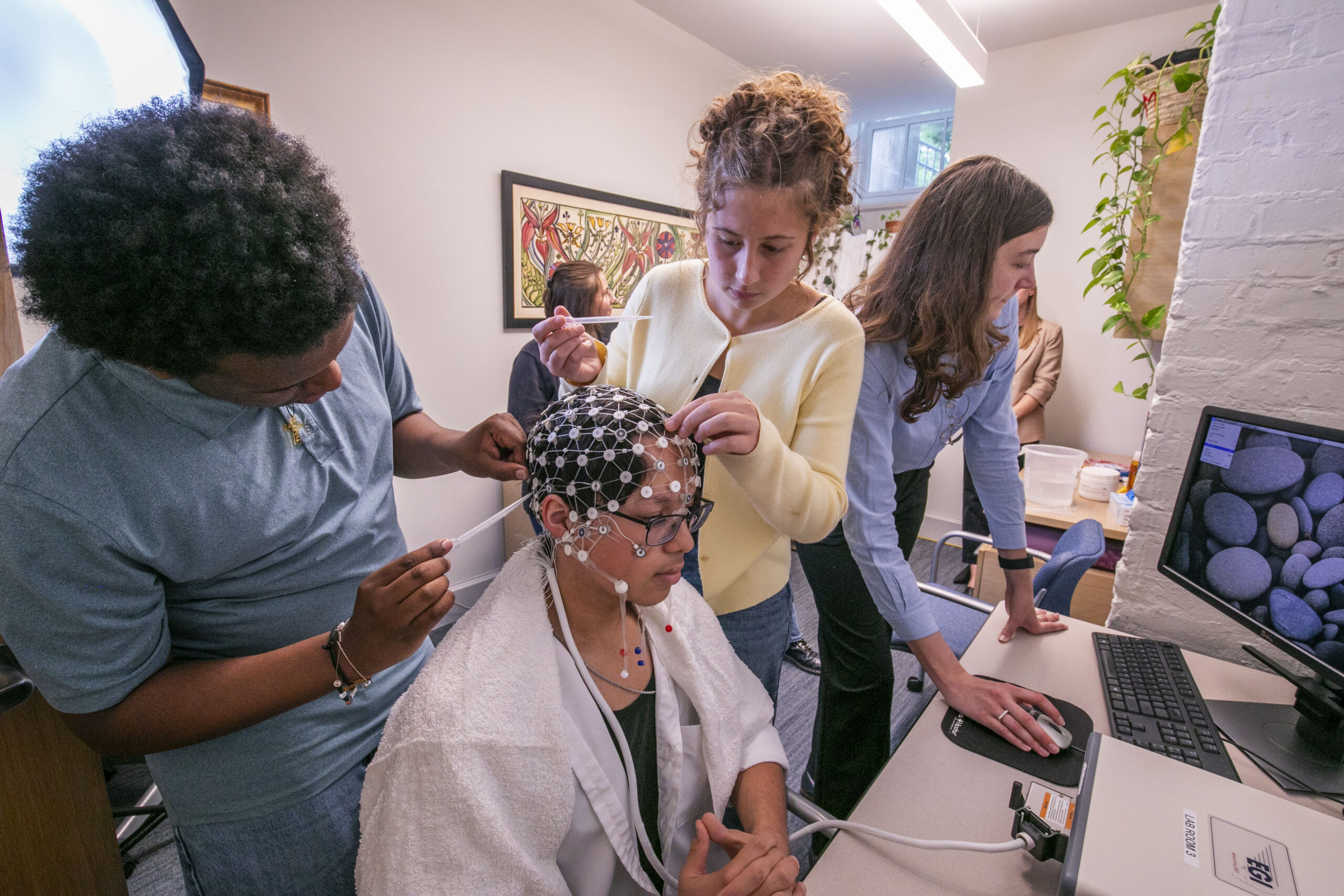
Photo courtesy of Pamela Popp.
She added that she and Popp are excited to see whether those results will be replicated in the next cohort of students this fall—or if, as they design their own studies, they might discover other insights that can better inform future smartphone management strategies in the classroom. In the meantime, however, they are bolstered by the fact that students, in weekly reflections and pre- and post-curriculum surveys, stated that they not only enjoyed the project, but felt like they gained a lot of knowledge from doing the experiments.
“We asked students both before and after the curriculum whether they could make a change based on what they’ve learned—and whether or not they were more likely to want to put away their phones or argue for keeping them,” said Popp. “By the end of the curriculum, their attitudes had changed. Not only did they feel like they understood the existing studies better, but some said they felt more like they should be leaving their phones at home.”
Deweese and Popp are continuing to refine and build out the curriculum and plan to publish it on the SSMV website for other schools to adapt and use in the future.
“This is a great way to engage students in a cognitive science investigation that they get to lead,” said Deweese. “This is something that any student can accomplish—they can dig a little deeper and understand how human thought processes and behaviors contribute to learning and the way we design future policies.”
Kathleen Roina, director of the Dana Foundation’s Education Program, said she was excited by the project’s initial results and is looking forward to seeing what Deweese and Popp learn from the next cohort of students.
“This is such a timely topic—and it’s a great opportunity to help students not only learn about neuroscience and how it can be applied in society, but to feel like they have a voice in helping to craft that policy,” she said. “By using pedagogy that is centered on students, they’ve built a curriculum that connects neuroscience to policy, while also teaching students critical science communication skills. I think it’s incredibly empowering for students. I wish a program like this existed when I was a kid.”
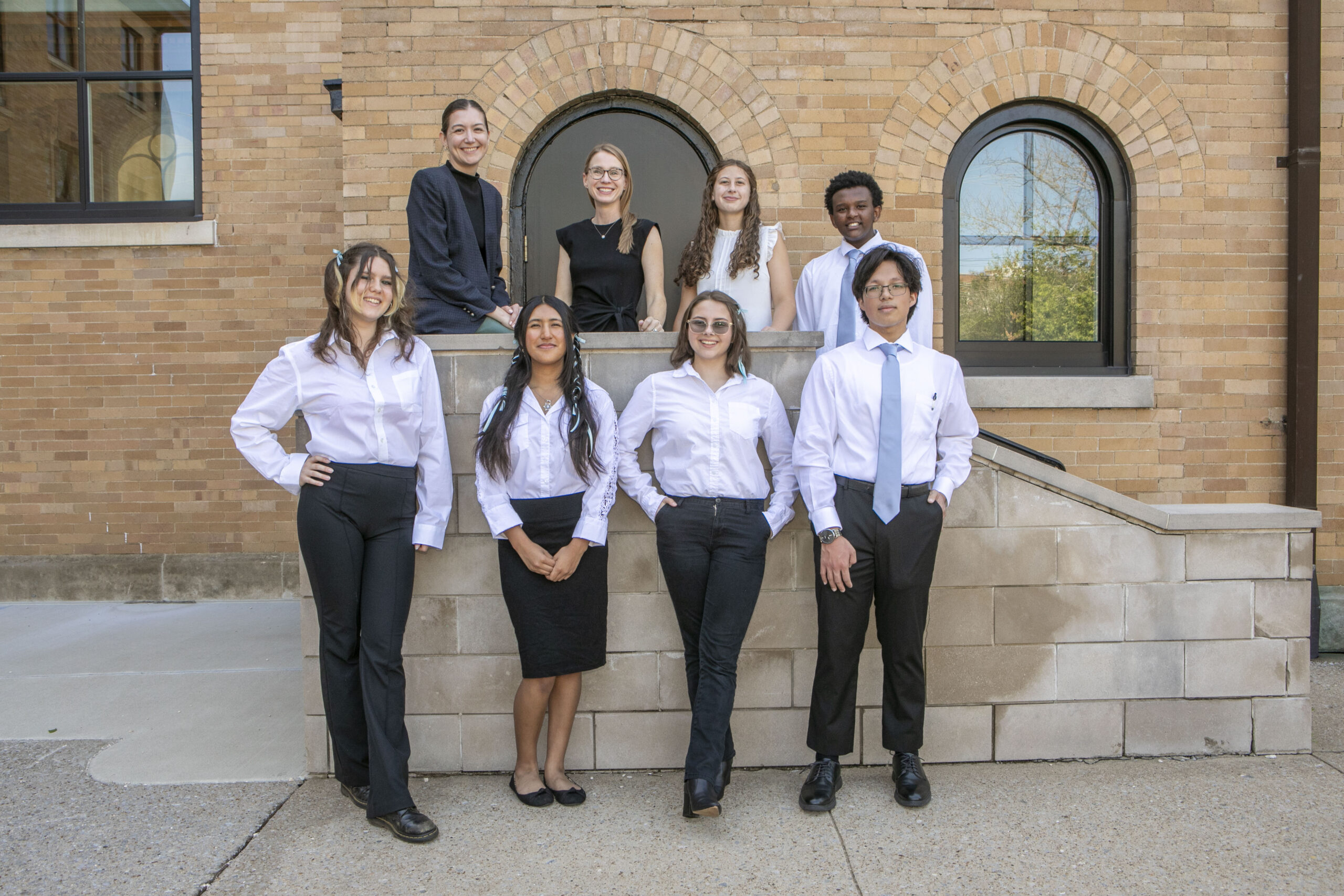
Photo courtesy of Pamela Popp.