News & Insights
Clinicians, Caretakers, and Creativity Return to the Stage in UnRavelled

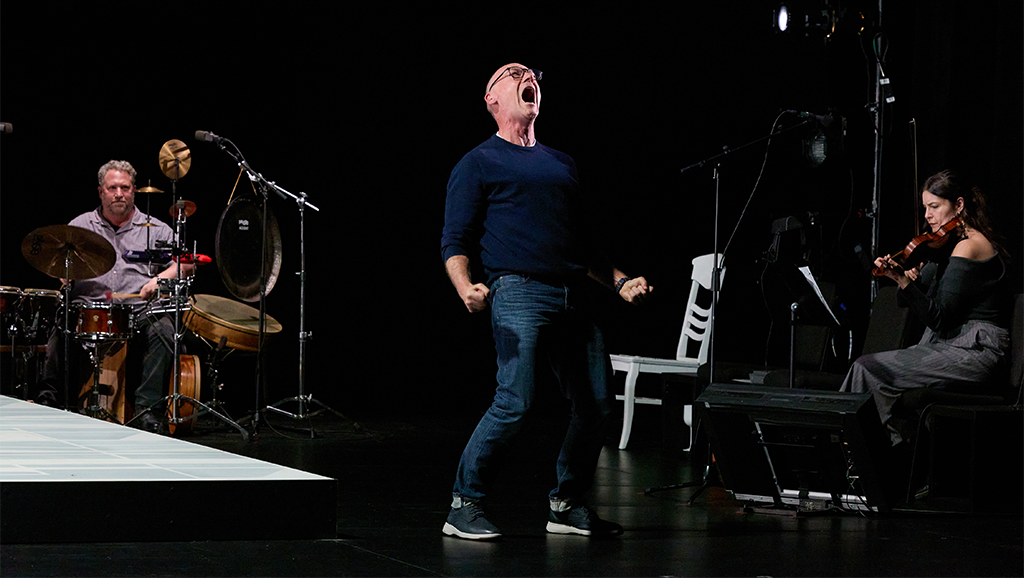
What if brain disease was understood as the beginning of something, rather than the end?
In UnRavelled playwright Jake Broder weaves together the true stories of Canadian scientist-turned-painter Anne Adams and French composer Maurice Ravel whose lives and work were transformed, decades apart, by frontotemporal dementia (FTD).
FTD is a rare form of dementia and the most common form for people under the age of 60. Its effects vary from trouble speaking and processing language to changes in personality and behavior.
In rare cases, it can lead to profound creative expression. Ravel’s musical composition Boléro (1928) and Adams’s interpretation of the piece in her painting Unraveling Boléro (1994) are considered by medical historians and neurologists as early indicators of their degenerative brain conditions.
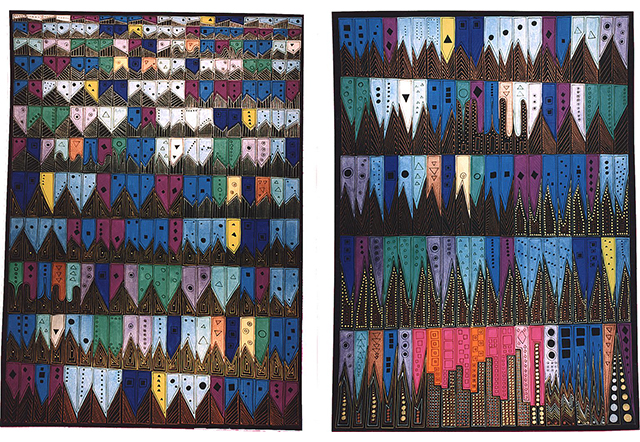
UnRavelling Bolero (1994) by Anne Adams with permission of A & B Adams Inc. Photo by Chris Grunder.
UnRavelled seeks to shed new light on an often misdiagnosed and misunderstood brain disease. Broder says that the audience is “not experiencing a story about neurodegeneration. They’re experiencing a story about creativity, hope, and connection.”
But it’s not simply a play. In Broder’s words, “it starts with the story, but then it radiates outward.”
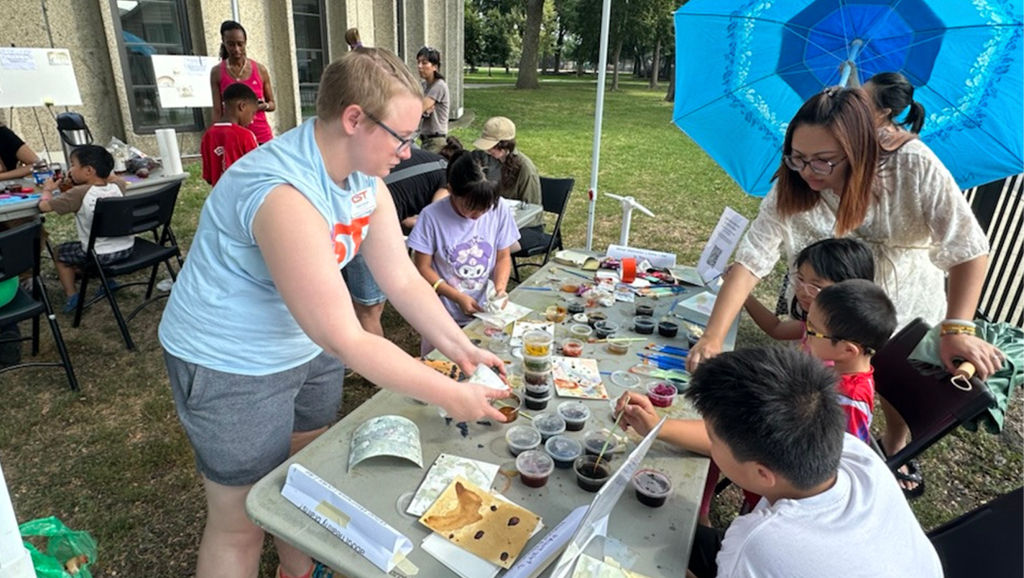
UnRavelled premiered last October at the Wallis Annenberg Center in Beverly Hills, providing audiences with much more than a typical stage performance. Outside the walls of the theater were workshops, exhibitions, and interactive experiences that invited both audience members and the wider community to engage and reflect on the relationships between dementia and creativity, caregivers and patients of brain disease, and neuroscience and community.
Programming at the “Brain Health Fair” was designed around the team’s three pillars:
- Raise awareness and reduce stigma around FTD
- Support community both living with and caregiving for FTD
- Promote early detection of FTD
These pillars come to life in the “Caregiver Roadmap,” a guide to local resources and community for people diagnosed with FTD. Developed by FTD advocate Emma Heming-Willis in collaboration with Bruce Miller, M.D., director of the Global Brain Health Institute and Edward and Pearl Fein Memory and Aging Center at the University of California San Francisco, the roadmap compiles information from the caregiving and scientific community, to be distributed and further built upon. Partners at Cedars-Sinai Medical Center were brought on board to develop a version specific to Los Angeles. Six hundred eighty-eight printed LA Caregiver Roadmaps for FTD were distributed at the premiere.
Broder is excited to share the template and expand the roadmap during the show’s national tour. Incomplete and in progress, Broder isn’t deterred by its “imperfections” but is instead driven to “do something lovely for these people right now, and then over here, and then over here” until one day they all bleed together. “Imagine this map of the US with these different centers that have roadmaps, and eventually there’ll be a national one … we’re creating a national network made up of local partners.”
While the story of Adams and Ravel will unfold on stages across the nation much as it did in Los Angeles, the roadmaps, and the overall outreach, will continue to evolve.
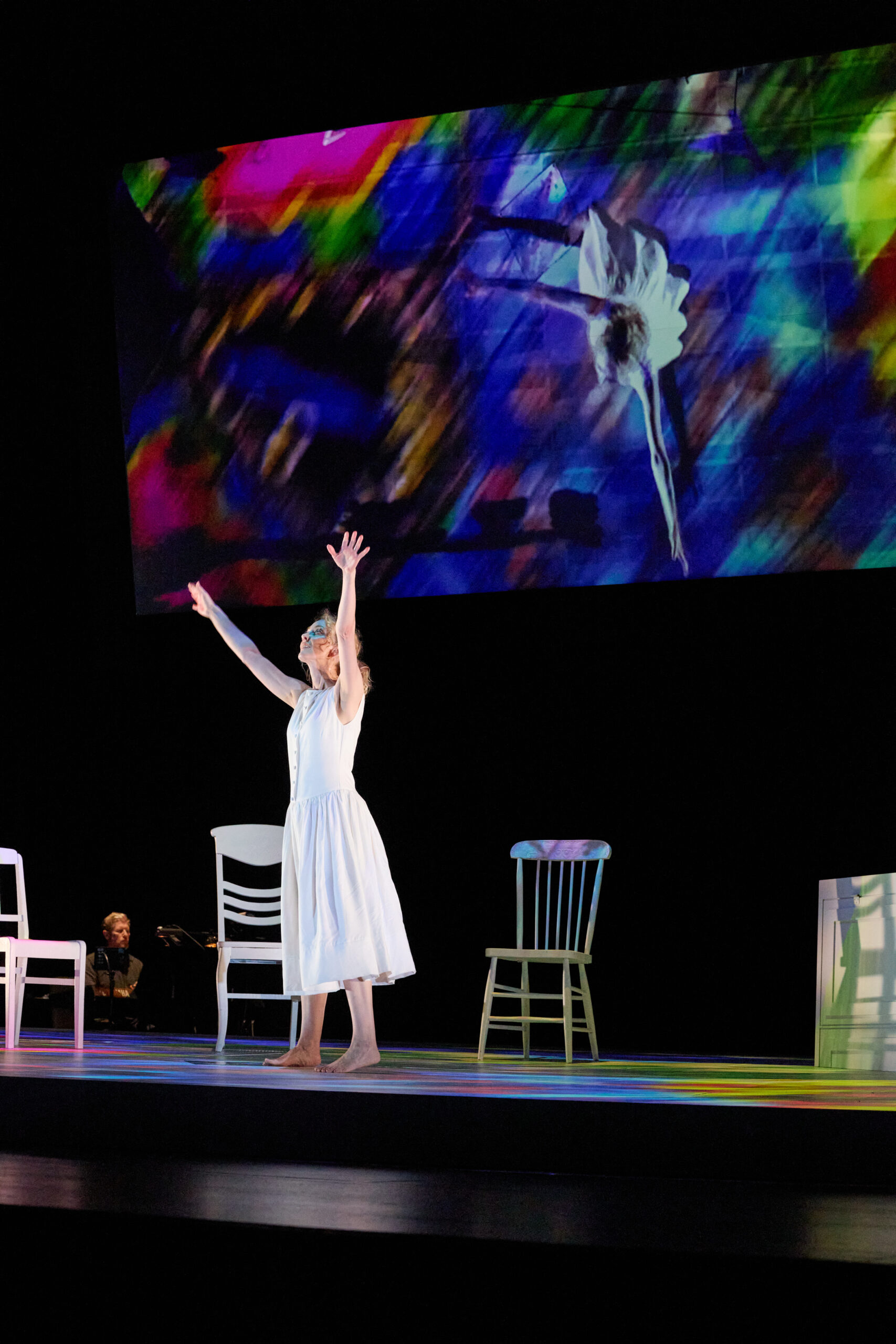
Lucy Davenport as Anne Adams in UnRavelled at The Wallis Annenberg Center for the Performing Arts. Photo by Stan Evans.
“There’s a deep flexibility about the way we work,” Broder explains. “The audience has told us they are excited and hungry and need something. So we’re asking what is needed, and we’re asking the institutions that we partner with what is needed, and then we listen to them… and try to connect those dots.”
The UnRavelled Outreach is supported by a Dana Foundation grant through its Frontiers program. The project’s commitment to multidirectional engagement reflects the goals of the Dana Frontiers program: to foster meaningful relationships between researchers and community members so that they can collaboratively identify and address key issues at the intersection of neuroscience and society. Through programming co-designed with patients and caregivers, the UnRavelled Outreach creates opportunities for reciprocal learning among people with FTD, caregivers, neuroscientists, clinicians, and other partners, while drawing on lived experience to shape clinical education and develop resources that help patients and caregivers connect to and navigate FTD care.
UnRavelled, which earned a Beverly Hills Theater Guild Playwriting Award and a Los Angeles Drama Critics Circle Award in Streaming Design and five nominations, kicked off its US and Canada tour in Philadelphia from October 8-11 at the Harold Prince Theatre alongside a Brain Health Festival designed to expand on the themes explored onstage.
The next stop on the tour is New York’s Miller Theatre, where UnRavelled will take the stage from October 23-24 followed by performances with dates to be announced in cities across the country, and one in Canada. For information on ticketing and updates on tour dates and locations, visit unravelledplay.com.