Impact Story
Training the Next Generation of Neuroscience & Society Leaders

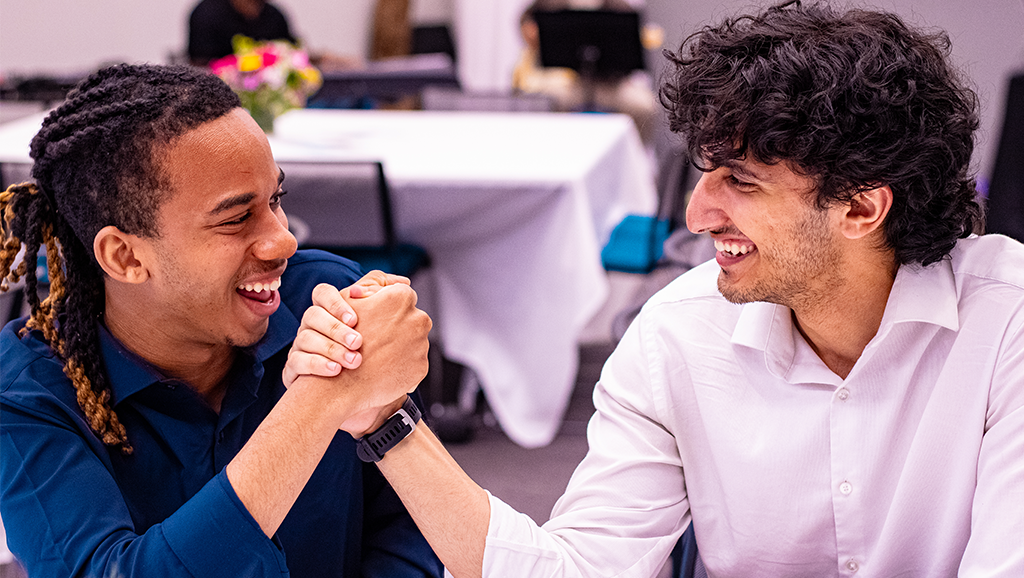
Fellows Camren Daley and Saddat Nazir at the 2026 NJAM Summit Welcome Reception. Photo courtesy of Godly Heritage Photography.
For the past two summers, the Neurotech Justice Accelerator at Mass General Brigham (NJAM) has brought scholars and early-career professionals from across the country together for a 10-week immersive research experience at the intersection of neurotechnology, ethics, and law. Through a curated program of workshops, speaker sessions, and direct mentorship, summer fellows have numerous opportunities to deepen their training at the intersection of neuroscience and society—and learn how to better consider medicine and science through legal and ethical lenses.
Ishan Dasgupta, J.D., MPH, who leads the Dana NextGen program, says the NJAM program is directly in line with the Dana Foundation’s mission to advance neuroscience that benefits society and reflects the aspirations of all people.
“The NextGen program places an emphasis on experiential learning that allows students to get outside of traditional classroom pedagogy, and provides professional development for the next generation of interdisciplinary scholars to work both in and outside of academia and the opportunity to perform rigorous collaboration between neuroscience and fields like ethics, law, the humanities, and science communication. Thanks to an incredibly diverse group of interdisciplinary leaders—a neurosurgeon, a lawyer, and a neuroscientist—NJAM is an ideal place to train if you are interested in finding ways to shape the way neuroscience impacts society more broadly.”
Dasgupta is referring to NJAM’s Co-Directors: Theresa Williamson, M.D., MPH, Francis X. Shen, Ph.D., J.D., and Gabriel Lázaro Muñoz, Ph.D., J.D. Each summer, they mentor a diverse, cross-functional group of fellows, each pursuing their own research project. At the end of the summer, fellows present their research at a Neurotech Justice Summit to a group of clinicians, legal scholars, ethicists, innovators, researchers, and community leaders.
Each fellow arrives at the Summit with a unique set of experiences. Florette Louissaint, NJAM’s senior program manager, emphasizes the program’s personalized nature. “We are really able to tailor and get to know each scholar—so we can focus on each individual’s needs. We can then help the fellows develop an individual development plan so they can delve into the topics and the issues they are most interested in and create a path that will work for them over the long term.”
But alongside these independent pursuits is a strong sense of collaboration and community. Jennifer Richards, NJAM’s program manager, adds that each fellow has access to mentors both inside and outside the program to guide them as they work on their individual research projects.
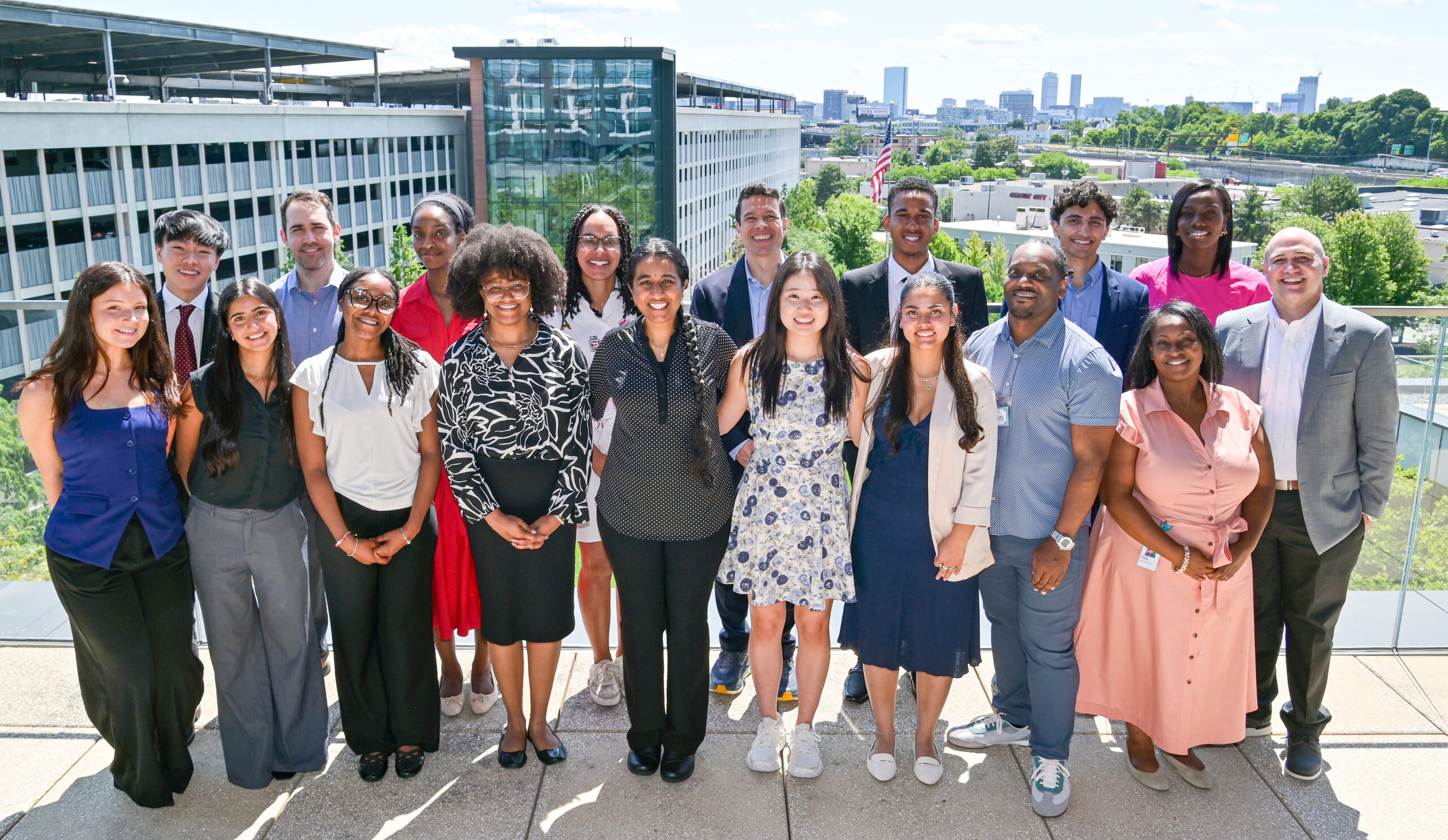
The NJAM team and fellows at the 2026 NJAM Research Symposium. Photo courtesy of Steve Lipofsky.
“They can all reach out to our leaders, post-doctoral fellows, or even their fellow peers when needed. You never know who has what resources or who knows someone else who can guide you,” she says. “By creating a safe space where people feel like they can come, talk to a wide range of voices, and then speak on their ideas and be received as they speak on those ideas, is really incredible.”
A shift in perspective
The fellows credit the program with helping them make a broad shift from single-discipline thinking to one where neurotechnology applications are intrinsically linked to other fields.
Nachelle Duque, 2025 NJAM Fellow
Nachelle Duque, who graduated from the College of Holy Cross with a major in biology and minor in Asian studies, says that her undergraduate coursework focused on the biology of brain-based conditions, but did not fully examine the ethical and societal implications of new technologies that could help treat them.
After working with Williamson as a research assistant on a Huntington’s disease model, Duque says that Williamson encouraged her to apply to the summer fellowship program. While there, Duque mapped access to neurotechnology across more than 5,000 hospitals in the United States, identifying critical healthcare access gaps.
“The program really opened up my perspective,” she says. “There are so many different fields in neuroscience to explore, and you don’t have to be limited by one discipline. For example, Dr. Williamson is a neurosurgeon, but she does so much community work. NJAM has allowed me to see that I can be a physician, but also be involved with public health, be involved with research, and be involved with helping my community. It does not have to be one static thing.”
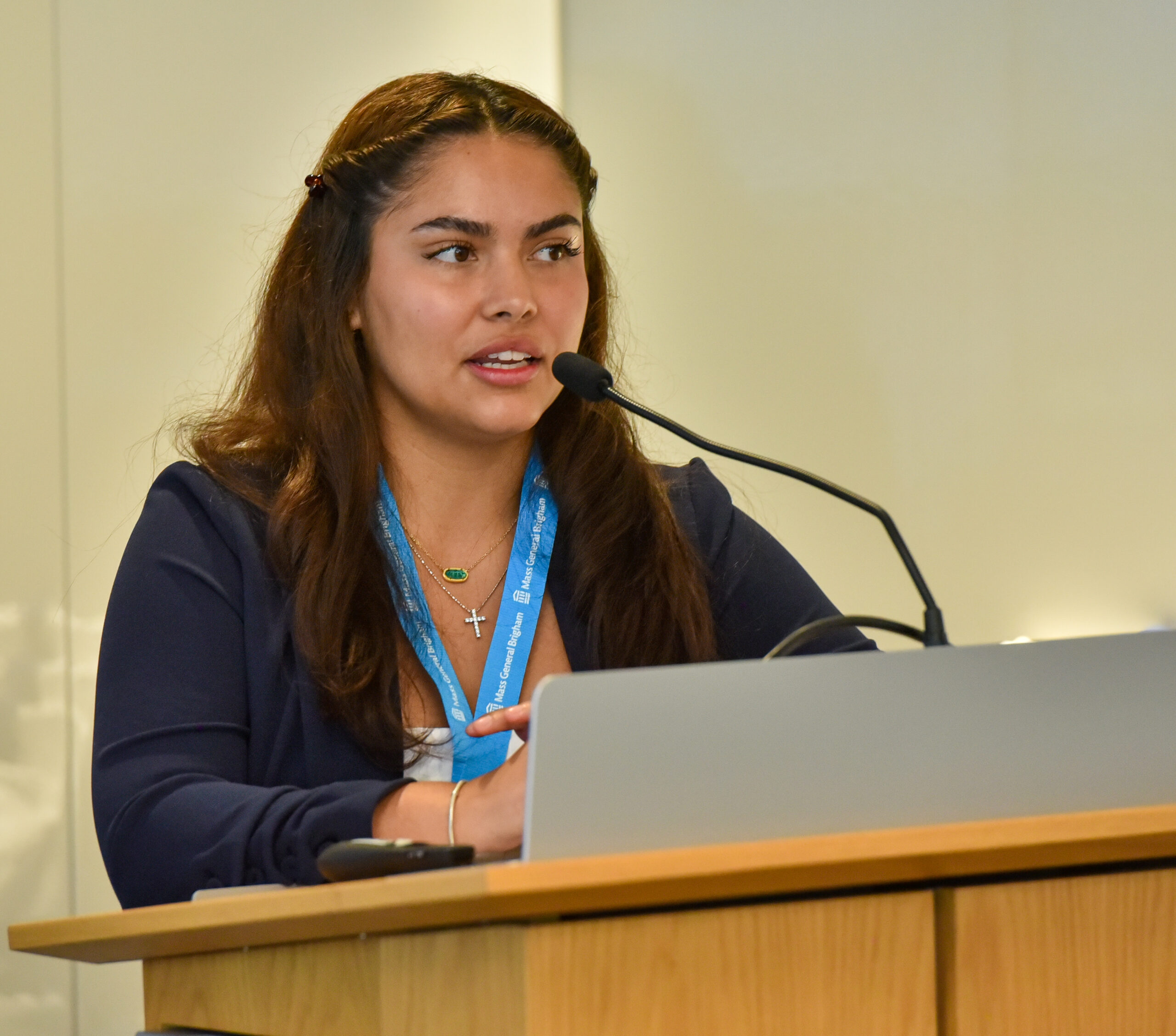
NJAM fellow Nachelle Duque presenting her research at the 2025 NJAM Research Symposium. Photo courtesy of Steve Lipofsky.
Today, as Duque prepares for medical school, she works as clinical research coordinator for the NJAM project.
Collin Liang, 2026 NJAM Fellow
Collin Liang says he really appreciated that NJAM helped introduce him to the importance of neurolaw and neuroethics. Like Duque, Liang uncovered the wide web of neuroscience while investigating access to healthcare.
“Health disparities aren’t just in the emergency room or in the community health center, they also exist at more tertiary care settings like neurosurgery where a neurotechnology might help you,” he said.
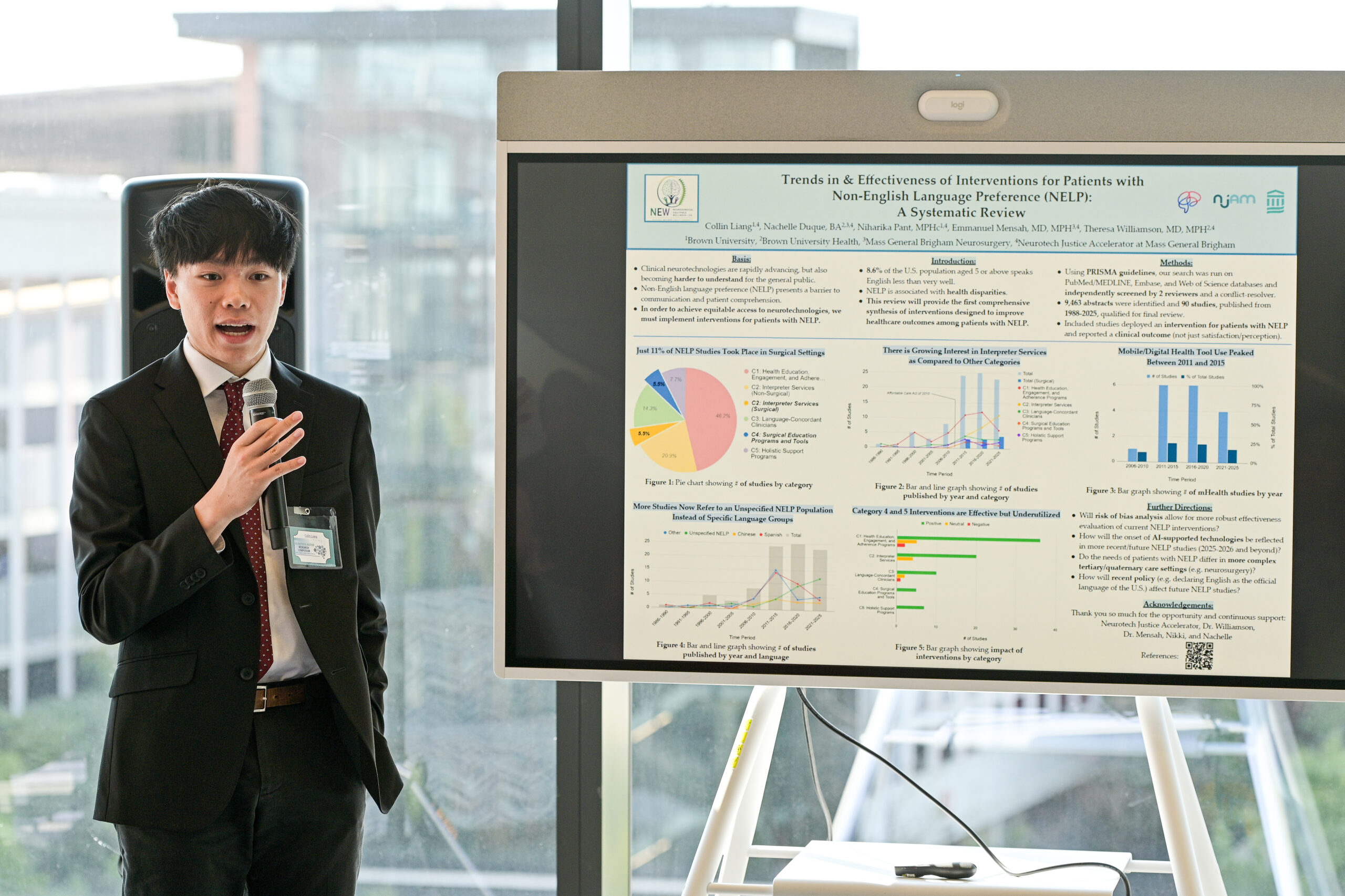
NJAM fellow Collin Liang presenting his research at the 2026 NJAM Research Symposium. Photo courtesy of Steve Lipofsky.
Liang’s project involved a systematic review of brain-based interventions for patients with non-English language preferences. As the youngest in his cohort—a sophomore at Brown University, he says he appreciated having mentors help him shape his public health research skills.
“We need more people in public health who are thinking about these kinds of issues and how pervasive they are across different parts of healthcare.”
Craig McFarland, 2025 NJAM Fellow
For Craig McFarland, the NJAM program instilled in him the importance of multiple perspectives in the development of neurotechnology. As a fellow, he worked on neuroethics issues surrounding polygenic risk scores for psychiatric disorders, as well as using neuroscience to support justice-involved youth through emerging adult programs.
He says he was thrilled to become part of a “one-of-a-kind community of lawyers, judges, neurosurgeons, neuroscientists, and community members who all care deeply about this intersection and have been working at it for years.”
Not only did he see the power of bringing these voices into conversation, but he left feeling like he could be part of that conversation, too.
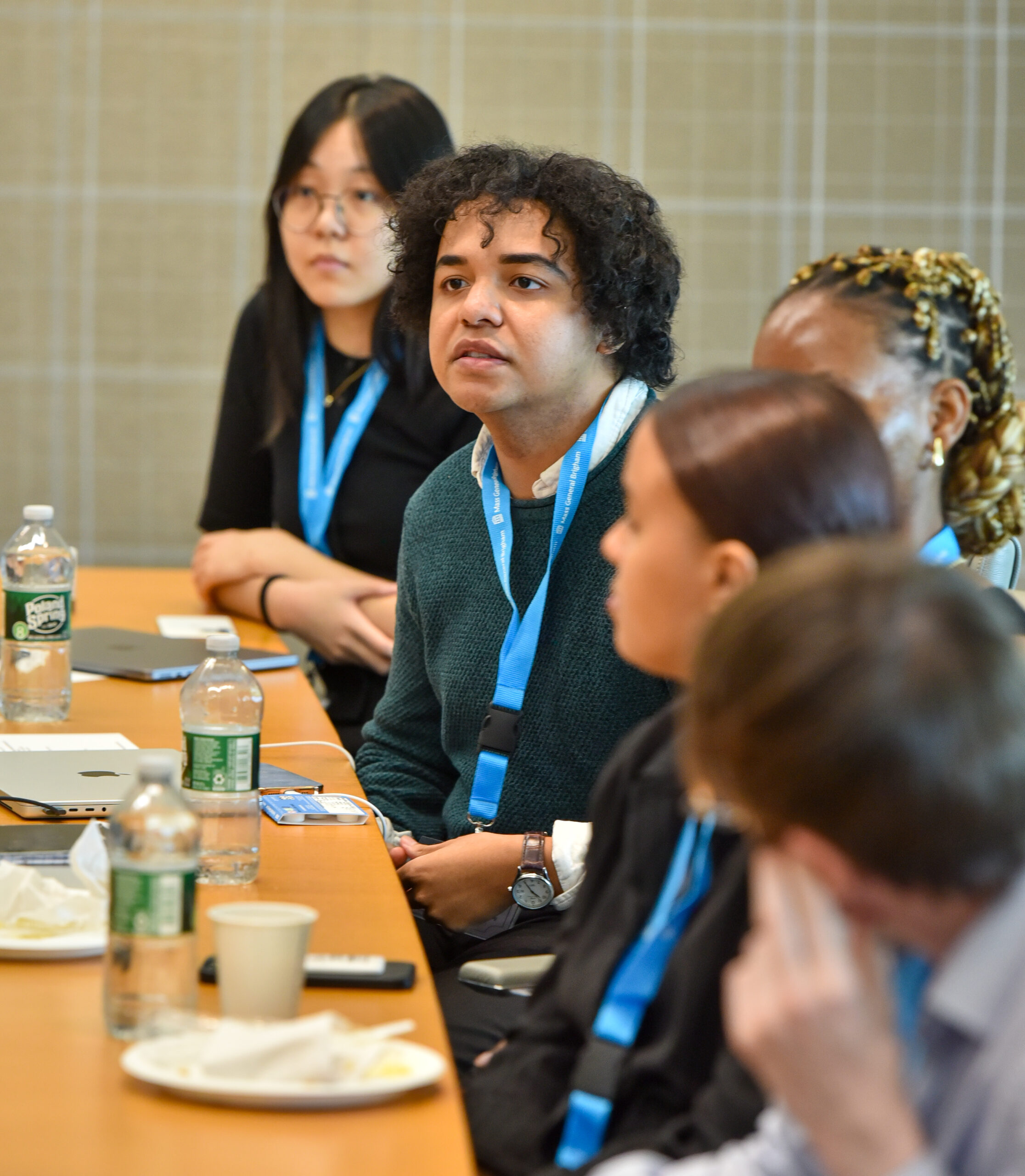
NJAM fellow Craig McFarland at the 2025 NJAM Research Symposium. Photo courtesy of Steve Lipofsky.
“My time at NJAM made me want to become someone who could one day lead this kind of work… NJAM made my north star this question of how can I become a great neuroscientist, scholar of the law, and, more importantly, how can I best contribute to society through that work.”
Since completing his fellowship, McFarland has completed a MsC degree in neuroscience at the University of Oxford and is currently a Knight-Hennessy scholar at Stanford University where he is pursuing both a doctorate in neuroscience and a law degree.
Breaking down silos
While working on their own research projects, fellows are provided with direct exposure to and mentorship from practicing clinicians, researchers, and lawyers who are already working at the intersection of neuroscience and society.
Camren Daley, 2026 NJAM Fellow
Camren Daley describes being “in the midst of a senior panic attack” trying to figure out what to do after graduating from the University of Connecticut with a major in physiology and neurobiology. He was studying for the Law School Admission Test (LSAT) when a former high school mentor, knowing he was interested in the intersection of neuroscience and law, suggested he apply to NJAM.
Daley says having the range of experiences from going into the operating room and observing a brain surgery to observing court proceedings helped expose him to the impact of neuroscience from multiple angles.
“We see technology, and specifically neurotechnology, evolving rapidly, but the court system is just not catching up with that,” says Daley. “NJAM showed me I could go to law school. But I could also go to medical school and study the brain and also be in the court system and actually contribute to neurolaw in that way, too.”
Daley’s time at NJAM unexpectedly pulled him toward medical school, with the goal of becoming an expert witness physician.
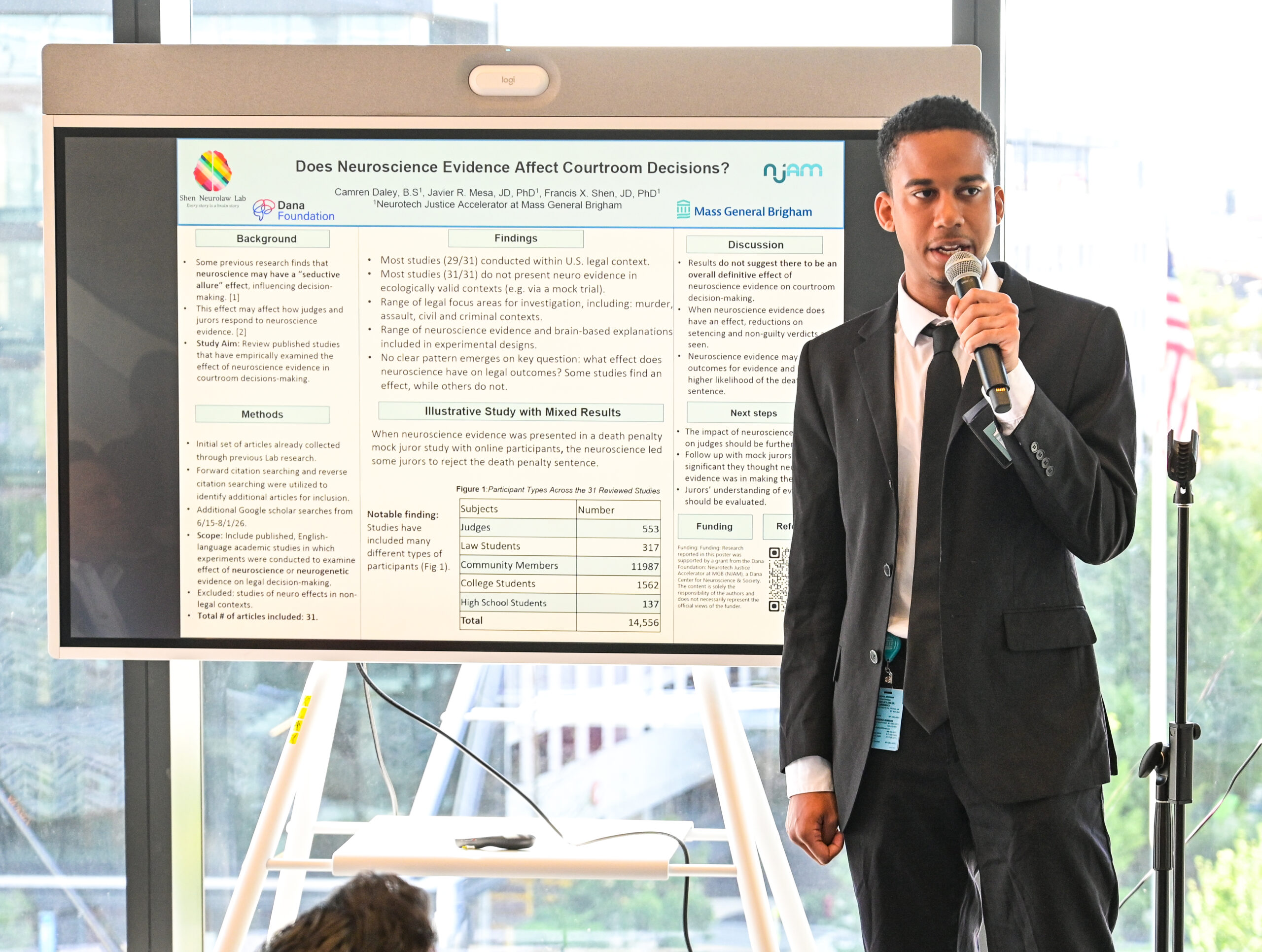
NJAM fellow Camren Daley presenting his research at the 2026 NJAM Research Symposium. Photo courtesy of Steve Lipofsky.
Rachael Caflisch, 2026 NJAM Fellow
Rachael Caflisch adds that working with such a broad interdisciplinary group demonstrated how neuroscience affects nearly every academic and professional domain.
“The more people I talked to, the more I realized we all have this kind of similar, common mission in mind,” she says. “We can work together, collaborate, and help each other in any way we can to move the field forward.”
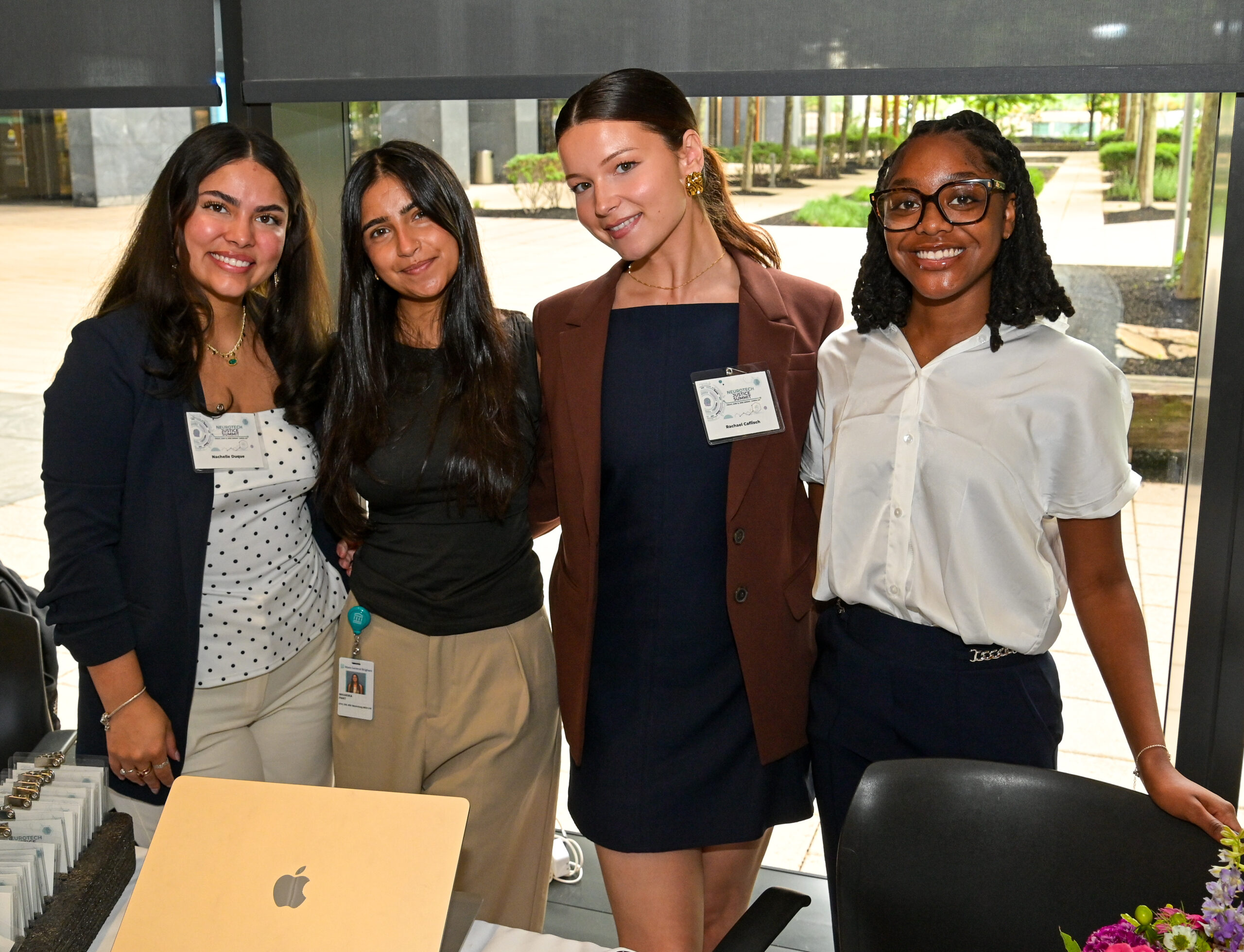
NJAM team members and fellows at the 2026 NJAM Summit. From L to R: Nachelle Duque, Niharika Pant, Rachael Caflisch, and Ajah Harris. Photo courtesy of Steve Lipofsky.
She adds that NJAM has completely changed the way she imagines her future legal career. As a student at Wake Forest Law, she now sees a wide swath of opportunities ahead of her.
Her advice for future fellows: “Be prepared to be overwhelmed at the end of [the program] with how many options there are for you in your career… the rules you thought were there that applied to careers in the law just fall down. You can see just how many paths are really open to you.”
Clara Yi, 2026 NJAM Fellow
The program’s interdisciplinary approach gave Clara Yi exactly what she had been searching for. After graduating from Stanford University with a degree in computer science and completing internships at SpaceX, Neuralink, the Salk Institute, and in AI policy at the Senate Appropriations Committee—Yi says she has long been concerned that too few are working on important governance issues surrounding the emergence of AI, brain-computer interfaces, and other technologies. While at NJAM, she worked on a project regarding the ethical disclosure of data recorded from brain-computer interfaces and brain-data ownership. She says one of the greatest benefits of the program was that she could get away from the fear-driven discourse that permeates so much of the discussion surrounding technology governance today.
“I learned I didn’t have to be inspired by fear. I could be inspired by knowing there were a lot of smart people working on these problems,” says Yi. “Even more importantly, I saw that having an interdisciplinary background like mine is a big strength—because to tackle these kinds of issues, you can’t just be an academic in a single field, you have to be someone who can communicate with people to understand lived experiences and different technologies, to gather anecdotes, stories, and narratives, to understand how these technologies are actually being used and how they should be used.”
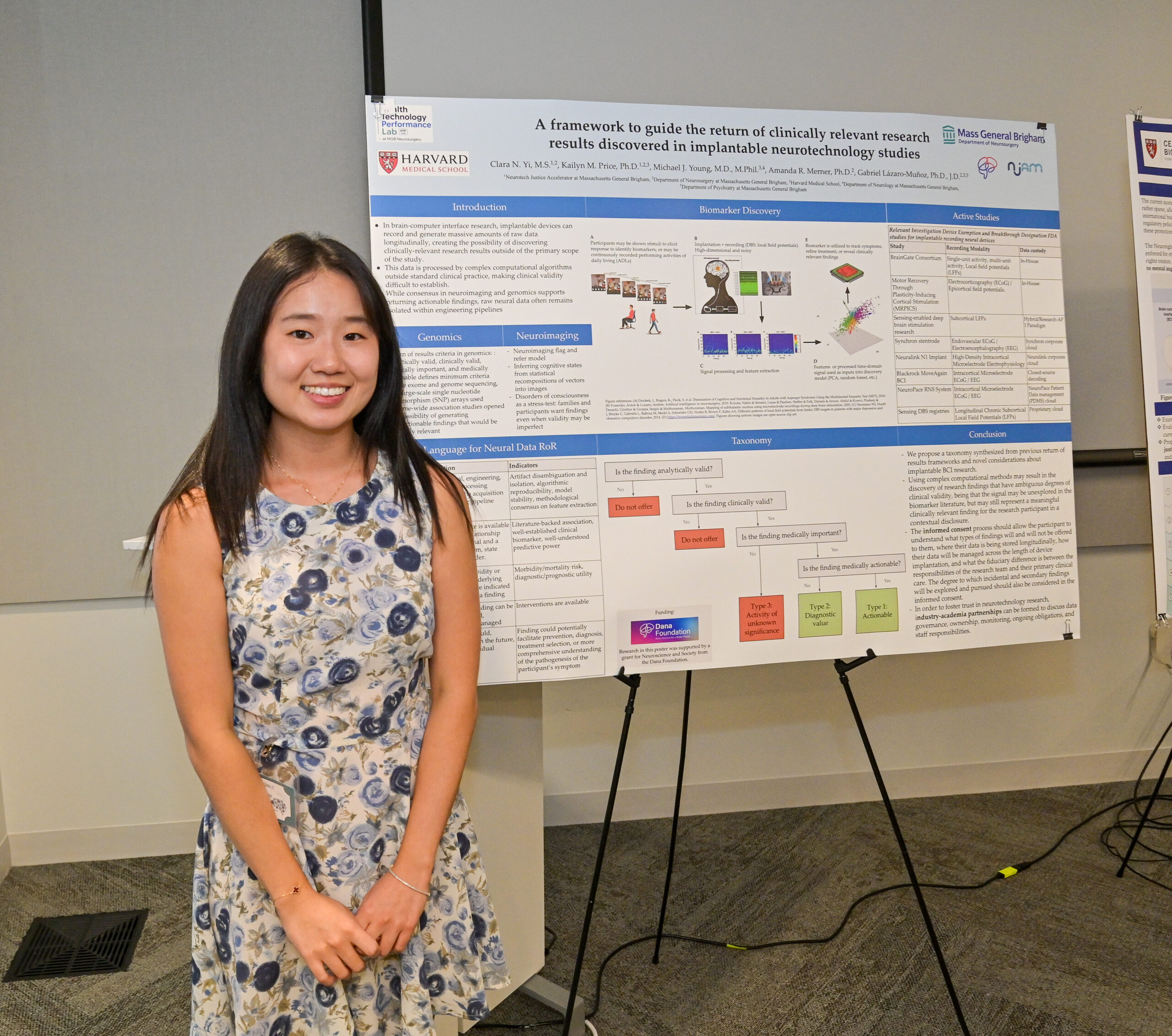
NJAM fellow Clara Yi and her research poster at the 2026 NJAM Research Symposium. Photo courtesy of Steve Lipofsky.
She is currently working as a clinical research coordinator but is excited, after attending medical school, to become a physician-engineer.
“You hear a lot about physician-scientists, but my goal is to be a physician-engineer—and my time at NJAM further reinforced that this isn’t just possible but valuable,” she says. “That kind of background opens up so much opportunity to be a leader in a time where technology is becoming increasingly important in medicine.
Taking a place at the table
Perhaps most importantly, fellows agree that the NJAM experience not only helped them become more knowledgeable about neurotechnology but more confident in sharing their thoughts and opinions about the different issues surrounding its development and use.
Chinmayi Balusu, 2026 NJAM Fellow
Chinmayi Balusu, a medical student at Kaiser Permanente School of Medicine, used her time as a fellow to examine how neurotechnology has been integrated into neurosurgery’s academic discourse and how emerging technologies like AI are being used in training. She says the program equipped her with a much broader view of neurotech.
“NJAM made me realize that I belonged at the table. Even where I am in the current stage of my career, I can still participate in these kinds of discussions and help shape where neurotech is going in medicine,” she says. “Whether that’s from a clinical perspective, sharing encounters with patients at conferences and these kinds of discussion spaces, or whether that’s talking more about the ethics or other issues we’re concerned about as junior clinicians, there’s space for me to sit at that table and take part.”
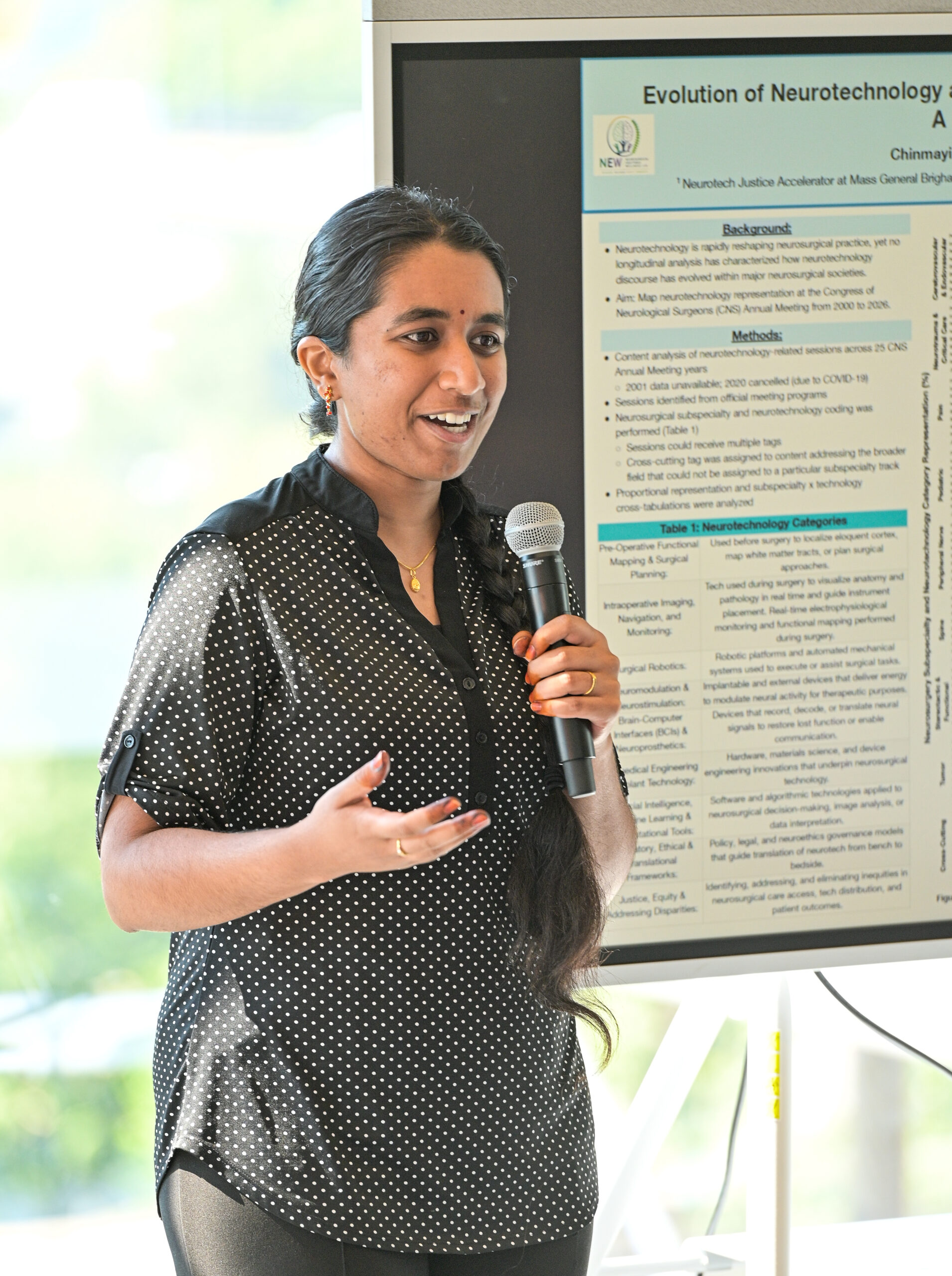
NJAM fellow Chinmayi Balusu presenting her research at the 2026 NJAM Research Symposium. Photo courtesy of Steve Lipofsky.
For Dasgupta, that is one of the strongest indicators of success for the program.
“Whether these fellows become academic professors, lawyers, judges, neurologists, surgeons, entrepreneurs, policymakers, or work in some other type of role, if they can ask questions about neurotechnology using this interdisciplinary lens, we hope they will embrace this kind of mindset as they continue their careers,” he says. “Regardless of where they end up, this is the kind of training that will allow them to ask deep questions for the benefit of society. And that’s what we need more of.”