News & Insights
What Makes a Strong LOI? Our VP Shares What Applicants Should Know


The Dana Foundation recently opened a new call for letters of interest (LOIs) for pilot projects in Neuroscience & Society, to advance neuroscience that connects brain research to real-world needs, values, and experiences. This funding opportunity welcomes project ideas that span the Foundation’s three program areas of education, training, and public engagement, placing emphasis on interdisciplinary approaches that examine how neuroscience intersects with societal needs and aspirations.
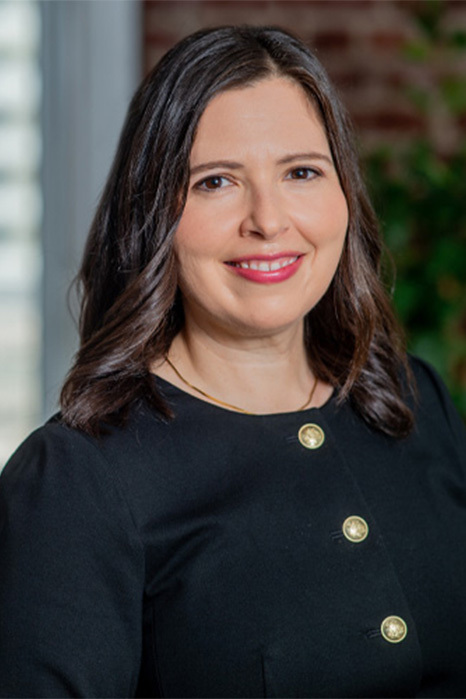
Khara Ramos, Ph.D.
To help prospective applicants better understand the intent behind this open call and what the Foundation looks for in proposed projects, we spoke with the head of Dana’s grantmaking efforts, Khara Ramos. In the Q&A below, Ramos offers insight into the goals of the open call, how projects are considered across the Foundation’s program areas, and what applicants should keep in mind as they prepare and submit a letter of interest.
Q: Why is supporting pilot projects at the intersection of neuroscience and society important for the Dana Foundation? What does the Foundation hope to achieve through this funding?
We embarked on our Neuroscience & Society (N&S) mission only a few years ago. Our grantmaking is anchored in three program areas focused on education, next generation training, and public engagement, which we developed based on our understanding of what is most needed to build towards our vision of neuroscience that benefits and is shaped by as many people as possible. At the same time, we recognize that N&S is still a new concept, and we want to build it out over time in partnership with others who are thinking about neuroscience in this new way.
To be true to our values of being grounded and seeking out diverse perspectives, it’s important that we have this open call for LOIs where anyone can send us an idea. I think of it this way: We are still very much in a phase of planting many seeds in our N&S garden with these pilot grants. Our first open call for LOIs for pilot grants was in 2024, and this process has been quite useful in providing insight into what people are thinking about and interested in doing in the N&S space. In the spirit of horizon scanning, having an open call for LOIs is a way to essentially bring “the horizon” to us. Indeed, the majority of our grants are pilot-sized (up to $150,000 in total funding for a project period of 12-18 months), and in the near term, we hope to continue building a portfolio of, essentially, experiments testing out the N&S paradigm. Anyone who is interested can review our impact report for highlights of what we did in 2025. Evaluation is a key part of this, too. What are we learning? What approaches work well? What are outcomes of our work? We’ll have a lot more to say about that over the next year.
The LOI guidelines ask applicants to clearly articulate the need, gap, or problem their project addresses. From your perspective, what qualities make a compelling pilot project?
In these LOIs, we are looking for pilot projects that are self-contained within the proposal, rather than asking us to support a larger, ongoing body of work. Another way to put it: Does the proposal clearly explain a project with a defined purpose, methodology, expected outcomes, and a plan for learning based on those outcomes?
We are looking for innovation—Is the applicant proposing an idea that is new in some way, and that would move us closer to the vision of a neuroscience field that is both informed by and beneficial to a broad public? We also are assessing the environment, looking for a good fit for the proposed work, including people with the necessary expertise to do the work well, and evidence that the intended audience or partners want to be involved. Finally, we’re aiming to fund innovative pilot grants in N&S that align with our values, so clear and meaningful articulation of alignment with our values is key, too.
As you mention, alignment with Dana’s mission, values, and program goals is a core component of the review process. What advice would you give applicants as they think about demonstrating this alignment in an authentic and meaningful way?
My top piece of advice is to be honest and sincere. Tell us in your own words and ideas what you want to do and why. It’s apparent when we get an application suffused with that sincerity, and that’s much more compelling than an application that, for instance, simply repeats what we have on our website. Relatedly, I would suggest that people not try to shoehorn an idea that was meant for another funder or funding opportunity into what we are looking for.
It’s common for us to get applications proposing to do neuroscience research, with the argument that because such research may eventually improve disease therapies for the public, this makes the work align with our N&S vision. For us, this is not sufficient (though we absolutely believe neuroscience research is critical and needs continued support). We are looking for substantive, active emphasis on addressing complex societal problems. I suggest reviewing the question ‘What does the Dana Foundation not fund’ in our FAQs for grant seekers.
The LOI guidelines mention three programs (Education, NextGen, Frontiers) and Opportunistic proposals. How should applicants decide which program area is the best fit for their idea?
The first step would be to carefully read the three programs’ goals and objectives. Interested applicants can also peruse our grants database, News & Insights articles, and Impact Stories for examples of funded projects within each program portfolio. If your idea clearly fits with one of the three program areas, you can indicate that as the match. If your idea spans more than one of our programs, you can indicate alignment with the closest-fit program or choose opportunistic as the category instead. Most importantly, don’t get hung up on this; our team reviews each LOI and re-assigns them as necessary to ensure each LOI is reviewed by the best-fit subject matter expert(s) from our team. And yes, we review all LOIs in-house.
The application deadline for the current funding cycle is January 30. Applicants may request up to $150,000 in funding for projects over a period of up to 18 months. Those interested in applying for can find more information in our FAQs or on the LOI submission page.